
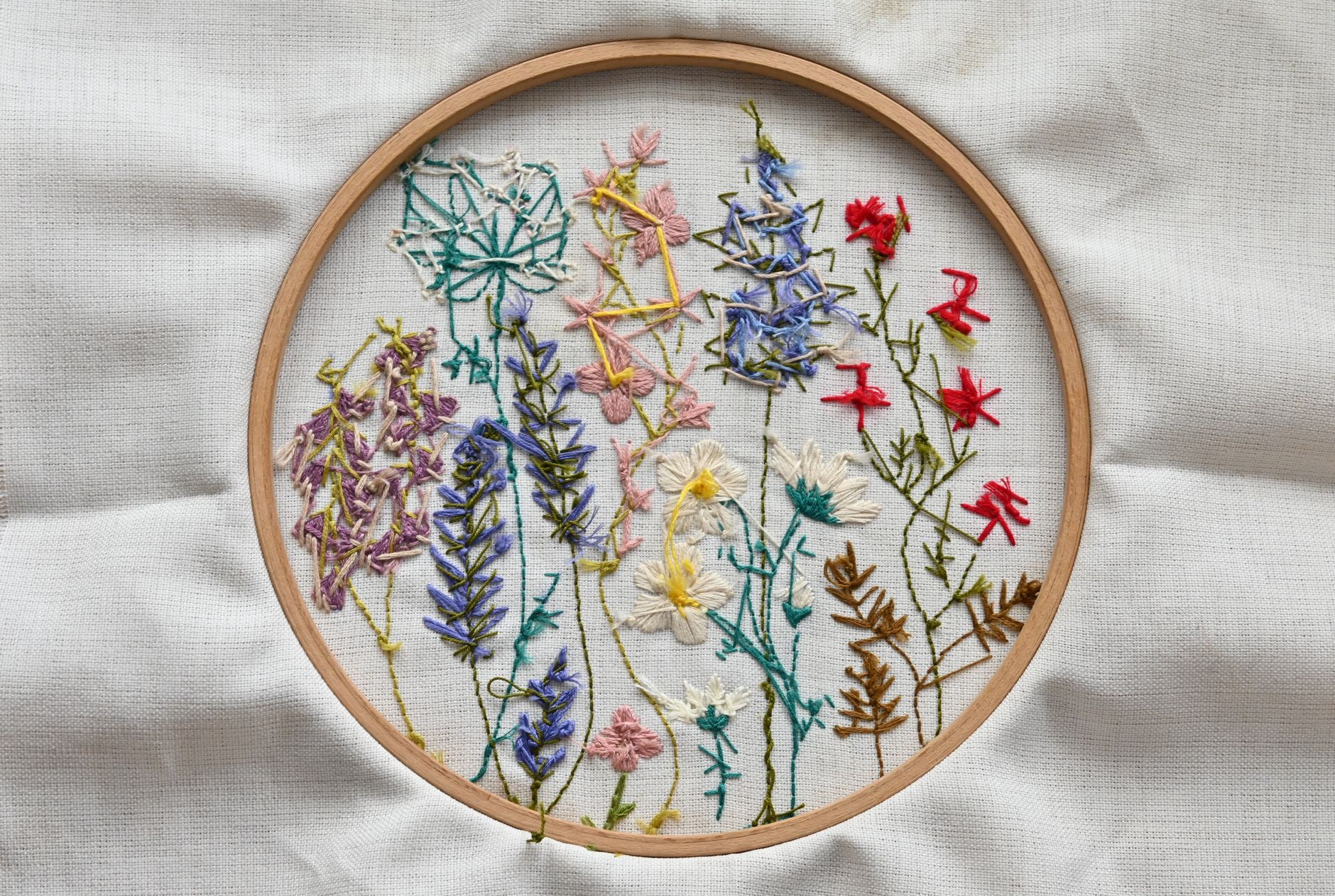
Cottagecore fabric trends have found a lasting home on sewing tables across Australia, and the demand shows no sign of slowing. What started as a visual mood on social media has settled into a genuine design movement, with sewists reaching for ditsy florals, soft mushroom prints, vintage botanicals, and earthy linen-look bases in project after project. The aesthetic taps into something most home sewists already love: a sense of handmade warmth, natural imperfection, and connection to slower, quieter ways of living.
What makes a fabric "cottagecore"
Cottagecore is less about a single motif and more about a feeling. Fabrics that fit the aesthetic tend to share a few key qualities: soft, slightly muted colour palettes drawn from the natural world, organic or botanical subject matter, and a print style that feels hand-drawn or vintage rather than digitally slick. Think pressed flower arrangements, tiny berry clusters, trailing vines, watercolour meadow scenes, and fine-line botanical illustrations printed on ivory, sage, dusty rose, warm cream, or soft moss grounds.
The scale of the print matters too. Cottagecore sits most comfortably in the small-to-medium range: delicate ditsy prints that read as texture from a distance, and mid-scale botanicals that reward a closer look. Very large, bold florals tend to tip into a more maximalist aesthetic. Very small geometric repeats feel too tailored. The sweet spot is prints that look like they could have come from a vintage fabric archive or a wildflower field pressed between book pages.
The most popular cottagecore motifs right now
Within the broader cottagecore category, certain motifs have become especially sought-after in custom and preorder fabric circles. Mushrooms, in particular, have become a signature element, appearing in everything from sweet illustrated clusters on children's fabric to sophisticated moody caps printed on dark forest grounds. Wildflowers, including poppies, chamomile, and lavender sprigs, remain perennial favourites. Bees, butterflies, and small birds appear regularly as secondary motifs woven into floral grounds. Herbs and foliage, especially hand-painted style botanicals, are increasingly popular for kitchen and home sewing projects.
Celestial elements also cross into cottagecore territory when handled softly: crescent moons, small stars, and sun motifs in muted golden tones rather than the high-contrast colourways associated with more on-trend space and galaxy fabric designs. The key is restraint in colour and a hand-crafted quality in the line work.
Colour palettes driving the aesthetic
The cottagecore palette is warm and worn-in. Deep forest greens, dusty terracotta, soft butter yellow, faded lavender, sage, and blush are the building blocks. Ivory and warm white grounds are preferred over stark bright white. Black grounds do appear, but they tend to lean toward the more dramatic "dark cottagecore" or witchcraft-adjacent substyle rather than the classic pastoral look. Earthy tones have been particularly strong, reflecting broader movements in trending colour palettes for custom fabrics that lean toward nature-inspired warmth rather than bold synthetic hues.
Faded, slightly desaturated tones work better than punchy brights. The goal is a print that looks as though it could have been washed a hundred times and has only grown more beautiful for it. Digital printing on quality fabric bases can recreate this washed-out, vintage quality beautifully when the design file is prepared with the right colour values.
Best fabric bases for cottagecore projects
Fabric choice matters as much as the print design when it comes to achieving the cottagecore look. Quilting cotton is the most popular base for the aesthetic: it takes digital prints well, presses crisply, and has a soft, slightly matte finish that suits the vintage quality of most cottagecore motifs. Linen and linen-blend fabrics are also a natural fit, bringing natural texture and slight irregularity that reinforces the handmade quality of the style.
For garment sewing, cotton lawn and voile carry botanical prints beautifully, making them ideal for floaty blouses, pinafore dresses, and gathered skirts that lean into the pastoral silhouette cottagecore dressing tends to favour. Softer knit bases can work for children's wear, particularly when the print itself is soft and whimsical. The goal across all fabric choices is a base that feels natural and unpretentious rather than synthetic or high-sheen.
What sewists are actually making
The projects most commonly associated with cottagecore fabric trends include gathered midi skirts, puffed-sleeve blouses, pinafore dresses, and prairie-style children's clothing. Beyond garments, cottagecore prints translate beautifully into home sewing: pillowcases, table runners, fabric napkins, and embroidery-hoop art. Smaller makes like scrunchies, drawstring pouches, and zip bags also perform well in cottagecore prints, especially for market stalls and handmade shops, since they give customers a low-cost entry point into the aesthetic.
Tote bags are another standout. A mid-scale botanical or mushroom print on a natural canvas-weight base is one of the most reliably popular handmade products in the cottagecore space, easy to sew and visually striking enough to sell without much styling effort. If you're building a product range around this trend, starting with smaller, faster makes is a smart way to test which specific prints resonate with your audience before committing to more involved garment projects.
How to source cottagecore fabric in Australia
The best way to access genuinely distinctive cottagecore prints in Australia is through custom digital printed fabric, whether via your own design or through an exclusive preorder run. The preorder model suits cottagecore well because the trend rewards specificity: a carefully curated botanical illustration or a hand-drawn mushroom cluster printed exclusively for a small run feels far more aligned with the values of the aesthetic than a mass-produced generic floral. Exclusivity and limited availability are part of what makes cottagecore fabric appealing to the sewists who love it most.
When evaluating cottagecore prints, look at the colour separations carefully. A print that looks warm and vintage on screen can come out harsh or bright if the design hasn't been adjusted for the specific base fabric. Ordering a sample before committing to a full preorder is always worthwhile, especially for designs with a lot of cream or ivory ground colour where any yellow or pink bias will be immediately visible in the finished cloth.
Cottagecore has proven to be more than a passing trend. Its roots in handmade culture, natural materials, and slow living align closely with the values of the sewing community, and that alignment is what keeps it relevant long after the social media moment that first named it has moved on.