
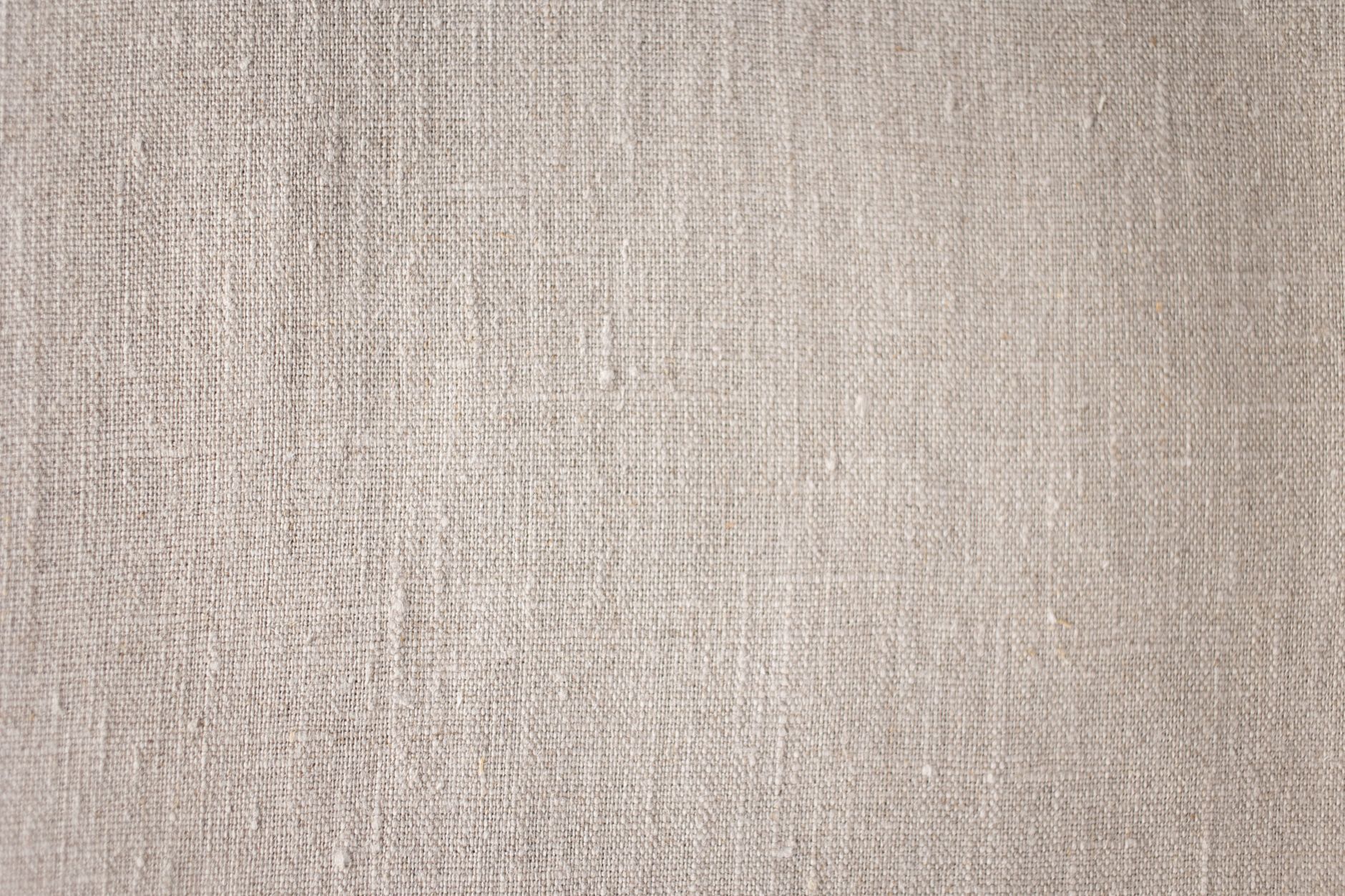
Linen fabric sits in a strange place in most sewists' minds: admired at a distance, bought with enthusiasm, then wrestled with at the cutting table. It wrinkles instantly, it frays at every edge, and it can feel almost stiff off the bolt. And yet experienced makers keep coming back to it. Once you understand what linen actually is and how it behaves, the appeal becomes obvious, and the quirks become manageable.
What linen actually is
Linen is made from the fibres of the flax plant. The stems are harvested, retted (soaked to loosen the fibres), and then spun into yarn. The resulting fabric is naturally hollow at the fibre level, which is the structural reason it feels so cool against the skin. Air circulates freely through the fabric, moisture wicks away quickly, and body heat doesn't get trapped the way it does in a close-weave cotton or a synthetic knit.
It is also one of the most durable natural fibres available. Linen actually gets stronger when wet, which means repeated washing doesn't break it down the way it does with many other fabrics. A well-made linen garment or home textile can last for decades with the right care. That durability has a direct bearing on how to make fabrics last longer, and linen is genuinely one of the best investments you can make in that respect.
The different types of linen fabric
Linen is not a single fabric. It comes in a range of weights and weave styles, each suited to different projects.
- Lightweight linen: sheer to semi-sheer, often used for blouses, summer dresses, and layering pieces. It drapes beautifully but can be slippery to cut.
- Medium-weight linen: the most versatile and commonly sold weight. Good for shirts, pants, skirts, cushion covers, and tote bags. It holds its shape while still having decent drape.
- Heavyweight linen: used for upholstery, structured bags, table linens, and home décor. It has very little drape and is firm to sew through.
- Linen blends: linen mixed with cotton, rayon, or even a small percentage of elastane. Blends often soften the initial stiffness and reduce wrinkling without giving up the breathability that makes linen so appealing in the first place.
Understanding weight is one of the most important steps in choosing any fabric for a project. The same principles that apply to cotton and woven fabrics generally apply here too. If you haven't already read about how to choose the right fabric weight for your project, it's worth doing before you commit to a bolt of linen for anything structural.
Why linen wrinkles (and what to do about it)
Linen wrinkles because the fibres have low elasticity. They don't spring back after compression the way synthetic fibres or even cotton jersey does. This is not a flaw, exactly. It is a direct consequence of the same open fibre structure that makes linen so breathable. You can't fully separate the two qualities.
That said, there are practical ways to manage linen's tendency to crease:
- Remove linen from the washing machine promptly and shake each piece out before hanging or laying flat to dry. Half the wrinkling happens in the spin cycle.
- Iron linen while it is still slightly damp. Dry linen is much harder to smooth out, and you'll need a higher heat setting with steam to make a real difference.
- Accept a degree of relaxed texture as part of the aesthetic. Slightly crinkled linen reads as intentional and lived-in when the garment is well cut.
- Look for stonewashed or pre-washed linen, which has been mechanically softened and tends to wrinkle less severely than untreated fabric.
How linen handles printing and dyeing
Linen takes dye well, but it behaves differently from cotton when it comes to digital fabric printing. The slightly textured, uneven surface of linen means printed colours can appear slightly muted or have a more artisanal, less uniform look compared to the same file printed on smooth quilting cotton or cotton jersey. For some designs, that texture is a feature. A botanical print or a loose watercolour design can look stunning on linen precisely because the fabric surface adds natural variation.
For designs where colour accuracy and fine detail are critical, a smooth cotton base will generally outperform linen. If you're comparing different base fabrics for custom printed work, the guide on which fabrics hold vibrant digital prints best covers the full breakdown of how different materials handle digital printing.
Sewing with linen: the practical side
Linen has a reputation for being difficult to sew, but most of the challenge comes down to preparation and technique rather than anything inherent to the fabric itself.
Before cutting anything, pre-wash your linen. Raw linen can shrink by up to five percent in the first wash, and it will also soften considerably. Washing before you cut means your finished project will hold its size and shape after laundering. Use a warm wash (not hot), and dry it flat or on a low tumble setting to avoid over-shrinking or distortion.
At the cutting table, linen frays readily. Treat every cut edge as a fray risk and finish seams as soon as possible. An overlocker (serger) is the fastest option, but a zigzag stitch on a standard machine works well too. Cut slowly and use sharp scissors or a rotary cutter with a fresh blade. Blunt blades pull at the fibres rather than cutting cleanly.
When pressing seams, use steam and press from the wrong side where possible. Linen responds very well to a firm press, and open seams lie flat in a way that makes finished garments look genuinely professional.
Linen in the Australian context
For Australian sewists, linen is arguably one of the most practical fabric choices available. Australian summers are long, hot, and humid, and linen handles that climate better than most natural fibres. It doesn't cling, it breathes, and it washes and dries easily, which matters when you're dealing with the kind of heat that leaves you reaching for fresh clothes every few hours.
Linen works across a wide range of projects: summer clothing, children's play clothes, home décor, market bags, and table linens. It holds up to the kind of daily use that would wear out a lighter fabric within a season, and it tends to improve with age, softening and becoming more pliable with every wash.
Is linen worth it?
Linen costs more than most cotton fabrics, takes more care at the cutting table, and requires a slightly different approach to washing and ironing. But for the right project, it delivers qualities that are genuinely hard to replicate. The breathability, durability, and natural texture of linen are not things you can fake with a cheaper alternative.
If you've been avoiding linen because of its reputation, it's worth picking up a half metre of a medium-weight variety and working through a simple project. Most sewists who actually spend time with the fabric come out the other side with a new appreciation for it. The extra effort is real, but so is the result.