
Stretch knit fabrics are one of the most rewarding categories to sew with, and one of the most misunderstood. Pick the right knit for your project and everything clicks: seams lie flat, garments move with the body, and the finished piece looks polished without a single fiddly zip. Pick the wrong one and you'll spend the afternoon fighting fabric that waves, tunnels, or loses its shape after the first wash. The difference usually comes down to three things: stretch percentage, recovery, and fabric weight.
What "stretch percentage" actually means
Stretch percentage describes how much a fabric extends beyond its resting length. A fabric measuring 10 cm at rest that stretches to 15 cm has 50% stretch. Simple enough. The confusion starts when sewists treat stretch as a single number when it's really two: horizontal stretch (across the grain) and vertical stretch (along the grain). Most knits stretch more horizontally than vertically, and that matters enormously for garment fit.
The four broad categories you'll encounter are:
- Two-way stretch: stretches in one direction only, usually horizontally. Good for skirts, loose tops, and anything that doesn't need to hug the body closely.
- Four-way stretch: stretches in both directions. Essential for active wear, swimwear, and fitted garments that need to move with the wearer.
- Moderate stretch (25–50%): suitable for structured knit garments, cardigans, and loose-fit tees.
- High stretch (75–100%+): reserved for fitted leggings, sports bras, and bike shorts where the fabric needs to compress and conform.
Pattern instructions almost always specify a minimum stretch requirement for a reason. If your fabric doesn't meet it, the garment won't fit as intended, regardless of how carefully you cut and sew.
Recovery: the number everyone ignores
Recovery is how completely a fabric returns to its original shape after being stretched. It's arguably more important than stretch percentage for anything you plan to wear and wash repeatedly.
Pull a 10 cm strip of fabric to its full stretch, hold it for five seconds, then release. If it snaps back to 10 cm, recovery is excellent. If it returns to 11 or 12 cm, it's already lost shape, and it'll only get worse with wear. Poor recovery is why cheap leggings go baggy at the knees after a few washes. It's why some knit tees develop a droopy neckline that no amount of ironing fixes.
Fabrics with elastane (also sold as Lycra or spandex) tend to have the best recovery. The higher the elastane content, the snappier the return. A cotton lycra with 5% elastane recovers reasonably well. One with 8–10% recovers excellently. Pure cotton jersey has almost no elastane and consequently very low recovery, which is fine for relaxed-fit pieces but a problem for anything structured or fitted. If you're sewing kids' clothing, recovery matters even more: children's garments take a serious beating and need fabrics that bounce back consistently. The comparison between cotton lycra and French terry for kids clothing is a good starting point if you sew a lot of children's garments.
Common stretch knit types and where they work best
Cotton jersey is the most common knit in home sewing. It's breathable, comfortable against skin, and easy to source. The downside is that it stretches mainly in one direction and has modest recovery without elastane. It's the natural choice for relaxed tees, lightweight dresses, and baby clothing.
Cotton lycra (also called cotton spandex) adds elastane to the mix. The result is a fabric that stretches further, recovers better, and holds its shape through repeated washing. It's the workhorse of activewear and children's clothing for exactly that reason. Fabric by TrishaMakes carries cotton lycra in a range of digitally printed designs, with each base fabric specified clearly so you know the stretch and recovery before you order.
Rib knit has a distinctive vertical texture and significant stretch in both directions. It's used most often for cuffs, waistbands, and neckbands, where you need fabric that hugs without constricting. On its own it works well for fitted tops and tube skirts.
Interlock is a double-knit fabric with a smooth surface on both sides. It's thicker and more stable than single jersey, with good recovery and a clean finish that doesn't curl at the edges. Interlock is the go-to for structured knit tops, baby rompers, and any project where you want a slightly dressier look without switching to a woven.
Ponte is denser again. It has a firm hand, minimal stretch compared to the fabrics above, and excellent shape retention. Ponte is for tailored knit pieces: blazers, structured skirts, pants. It sews more like a woven than a knit, which makes it accessible for sewists who find high-stretch fabrics frustrating.
Sewing stretch knits without the stress
The biggest mistake new sewists make with knits is treating them like wovens. Knits need seams that move with the fabric, or the thread will snap the moment the garment is worn. A straight stitch on a knit seam is a guaranteed pop.
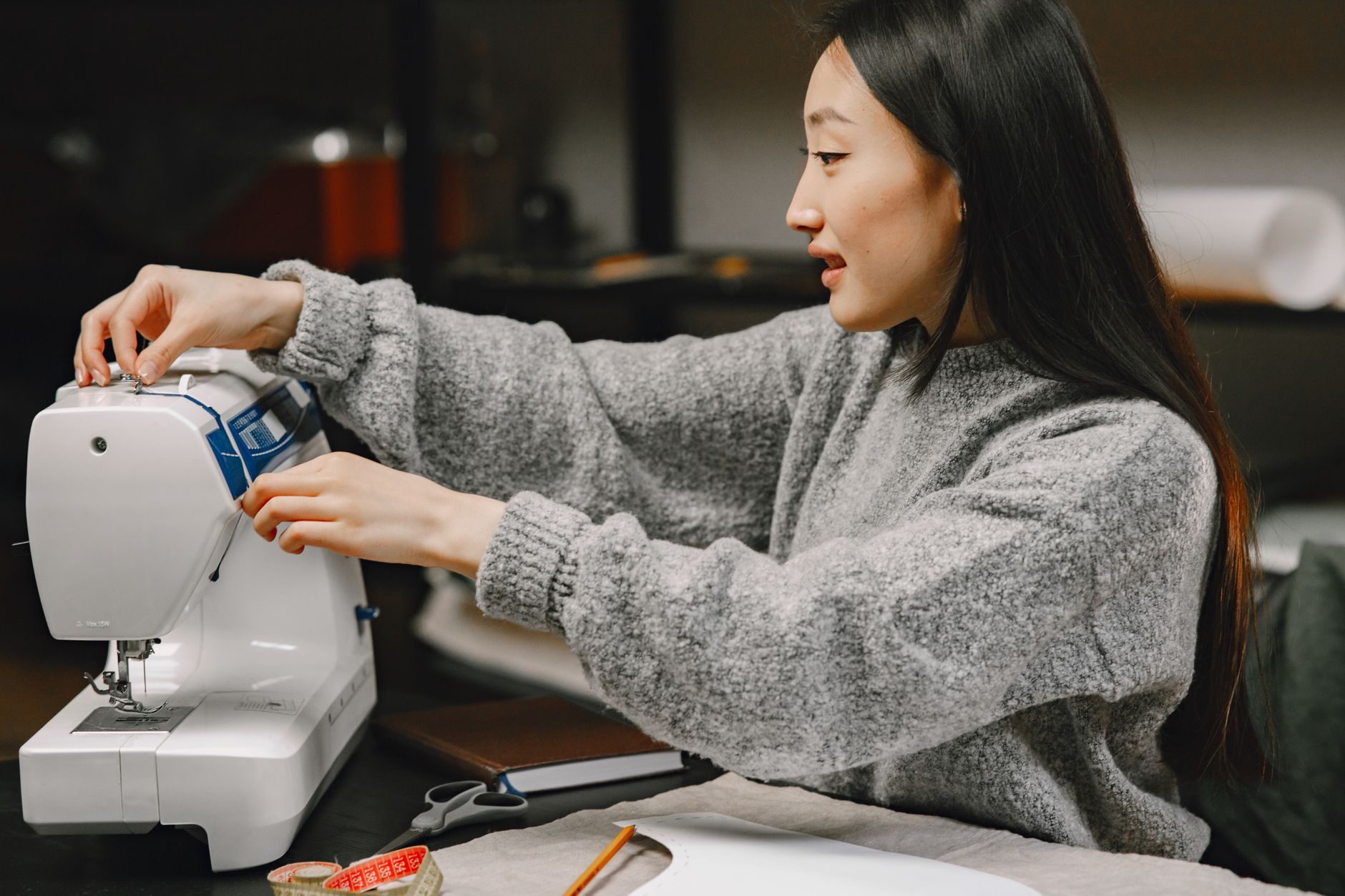
If you have a serger, use it. A serger trims, overlocks, and sews in one pass, producing stretchy seams that move without breaking. If you're on a regular sewing machine, the lightning bolt stitch or a narrow zigzag (0.5 mm width, 2.5 mm length) is the standard workaround. Some machines have a dedicated stretch stitch that works even better.
Needles matter too. A ballpoint or stretch needle has a rounded tip that pushes between fabric threads rather than piercing them. Using a sharp needle on a knit causes skipped stitches and small holes along the seam line. Swap to a ballpoint before you start, not after you've already sewn three seams and can't work out why the stitching looks wrong.
Tension is the other adjustment most sewists need. Knits usually require slightly lower upper thread tension than wovens. Test on a scrap first, stretch the test seam gently, and check that the stitches hold without popping or puckering.
How digital printing changes things for stretch knits
One reason custom stretch knits have become so popular is digital printing. Digital fabric printing deposits ink directly onto the fabric surface, which means the print doesn't add stiffness or affect stretch the way screen printing can. A digitally printed cotton lycra stretches exactly the same as the base fabric, with no cracking or distortion at the print as the fabric moves.
That said, the base fabric choice still matters for print quality. Tighter-weave knits and those with a smooth surface generally hold finer detail better. Heavily textured knits can cause the print to appear slightly broken or uneven up close. If you're ordering custom digitally printed knit fabric, it's worth asking about the fabric's surface texture alongside its stretch and weight specs. The comparison of which fabrics hold vibrant digital prints best goes into more detail on surface prep and fibre content.
A quick rule for matching knit to project
Before you cut, ask three questions. First: does this project need to hug the body? If yes, you need four-way stretch and good recovery. Second: will it be washed frequently? If yes, elastane content matters. Third: does the pattern specify a stretch percentage? If it does, test your fabric against it before cutting a single piece.
Getting those three answers right before you sit down at your machine is what separates a finished garment that fits well from one that lives in the "I'll fix it someday" pile. Stretch knits are genuinely satisfying to sew. The preparation is the skill.