
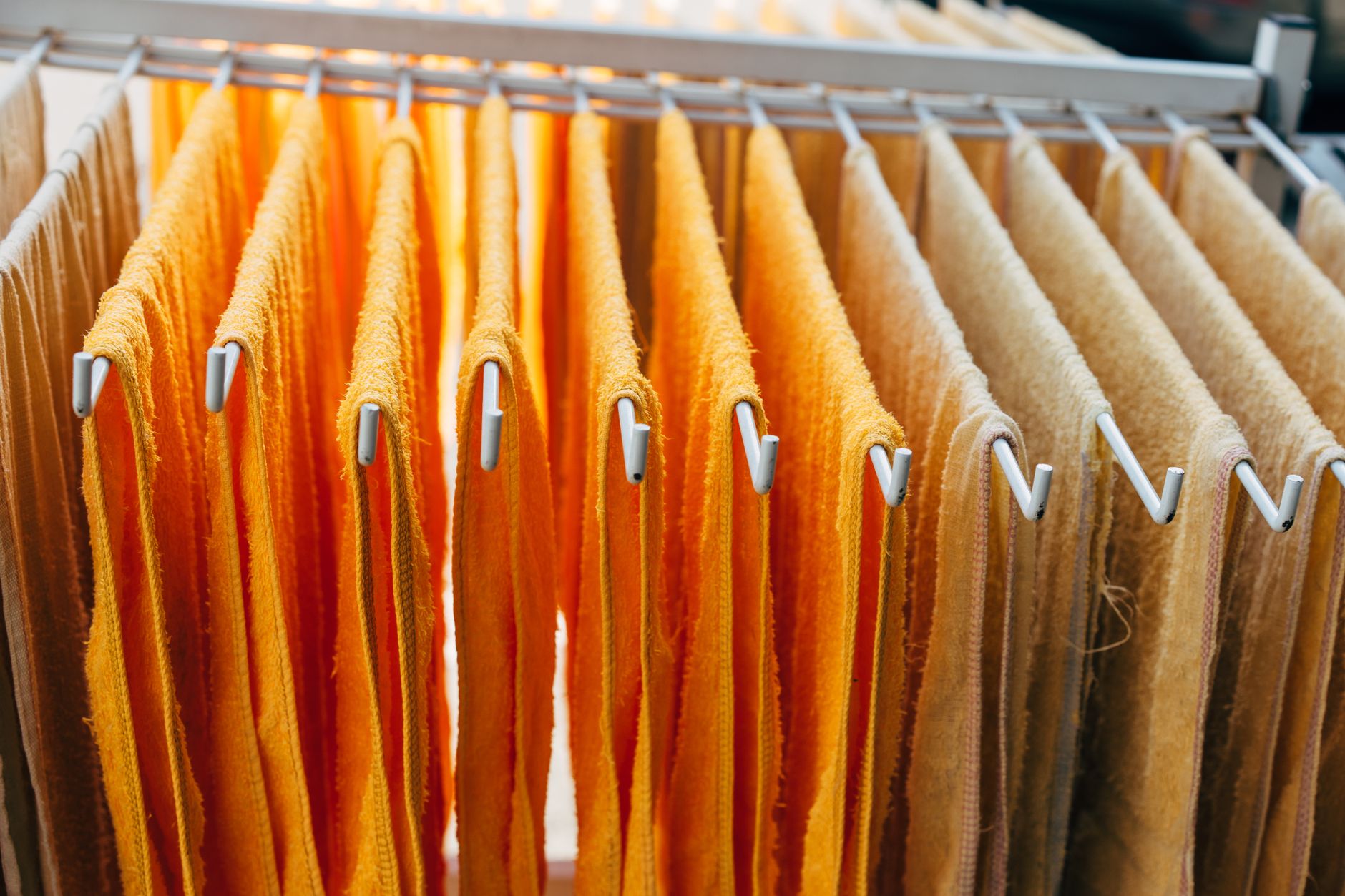
Most sewists spend a lot of energy on washing, pre-treating, and ironing, then hang their fabric over a chair and call it done. Drying is the step that gets the least thought and causes some of the most frustrating damage. Shrinkage, warped grain lines, colour loss, and permanent creases can all happen at the drying stage, not in the machine. Getting it right is straightforward once you know what each fabric type actually needs.
Why drying matters as much as washing
Heat and tension are the two things that permanently change fabric structure. A machine wash at the right temperature does very little damage on its own. Put that same piece of fabric in a hot tumble dryer or hang it wet over a thin line, and the fibres either shrink further or stretch out of shape under their own weight. The result feels like a washing problem because you only notice it when the fabric comes off the line, but the dryer was the culprit.
Printed fabrics face an additional risk. Prolonged heat exposure, especially in a tumble dryer, breaks down the dye bond between ink and fibre. You won't see it immediately. After 3 or 4 drying cycles on high heat, the print starts to look chalky at the edges and dull across the whole surface. Learning how to wash digital print fabric without fading is important, but drying correctly is what locks those results in.
Tumble drying: when it's safe and when it isn't
Tumble dryers are convenient, but they're not appropriate for every fabric. The rule is simpler than most guides make it sound.
Plain cotton wovens, including quilting cotton, canvas, and most home-dec fabrics, handle a warm (not hot) tumble dry reasonably well if they've already been pre-shrunk. Remove them while still slightly damp and smooth them flat. Leaving cotton in a hot dryer until bone dry sets creases and can cause additional shrinkage of around 2 to 3 percent per cycle.
Knit fabrics, including cotton jersey, French terry, and cotton lycra, should be tumble dried on low heat or skipped entirely. The mechanical tumbling pulls at the knit loops and distorts the grain, which is why so many handmade garments come out wavy along the hems after a few washes. The fabric itself didn't fail. The dryer did.
Digital printed fabrics deserve the most caution. High heat degrades the reactive and pigment dyes used in digital printing faster than almost any other care step. Warm air or flat drying is the right call. If you've invested in a custom preorder print, a tumble dryer on high is not the place to finish it.
Minky, fleece, and velvet should never go in a tumble dryer on heat. These pile fabrics mat permanently when tumbled. Air dry them flat, or on a very low, no-heat cycle if the dryer has one.
Flat drying versus line drying
Line drying is fine for most stable woven fabrics. It's not fine for knits. Hanging a wet knit piece vertically puts the full weight of the water on the lower half of the fabric, stretching it lengthwise. A garment that fits perfectly off the machine can be several centimetres longer after one line-dry session.
Flat drying on a mesh rack or a clean dry towel is the correct method for knit yardage, finished garments cut from knit fabrics, and anything with a heavy, water-absorbent structure like French terry or fleece. Reshape the piece while it's wet, smooth it to its intended dimensions, and leave it undisturbed. Don't turn it inside out halfway through, as this drags the fibres. Let it dry from one side fully, then flip it if the underside feels damp.
For line drying wovens, use a thick wooden or padded dowel rather than a thin wire line. Thin lines create a permanent crease across the middle of the fabric. Fold the fabric over the rod in a gentle loop rather than pegging it at a corner, which creates a stress point.
Sun and UV exposure
Hanging printed fabric in direct, strong sunlight is one of the fastest ways to fade it. UV light breaks down dye molecules just as effectively as heat does. This is worth thinking about in Brisbane and across Queensland, where summer sun is intense even in the morning hours.
Dry printed fabrics in shade or indoors with good airflow. Plain-coloured or undyed fabrics are less sensitive, but dark solids and saturated prints are the most vulnerable. A single afternoon in direct summer sun can noticeably shift a deep navy or a rich emerald green. Inside, near an open window with a fan, is the ideal setup for most printed yardage.
How to dry fabric before cutting
Pre-washing and drying fabric before you cut is a standard step for most projects, and the drying method here is just as important as the wash. If you've washed your fabric to pre-shrink it, dry it the way you intend to dry the finished project. A fabric pre-washed in warm water and line-dried may still shrink in a later tumble-dry cycle if the finished item goes in the dryer.
Match the drying method at pre-treatment to the drying method you'll use in real life. This is the simplest way to make sure your pattern pieces and seam allowances are accurate. If you're not sure about the full pre-treatment process, there's a clear overview of how to pre-treat fabric before sewing that covers the washing, drying, and pressing steps in order.
Quick reference by fabric type
- Quilting cotton and wovens: Warm tumble or line dry in shade. Remove slightly damp and press.
- Cotton jersey and knits: Flat dry on a rack. Do not line dry vertically.
- French terry and fleece: Flat dry or low no-heat tumble. Keep away from direct heat.
- Minky and velvet: Flat dry only. Never tumble with heat.
- Digital printed fabrics: Shade or indoor air dry. Avoid tumble drying and direct sun.
- Linen: Line or flat dry slightly damp, then press while still damp for best results.
Finishing after drying
Dry fabric is rarely ready to use straight off the rack. Most wovens benefit from a press while still very slightly damp, which sets the grain and removes fold marks without the effort of fighting fully dry fabric at the ironing board. If your fabric has dried completely, a light spray of water before pressing works just as well.
Printed fabrics need a careful approach at the iron. Pressing on the reverse side with a pressing cloth is the safest method. If you need more detail on this, the guide on how to iron printed fabric without ruining the design covers temperatures, cloth types, and the order of pressing for different fabric weights.
One thing that's easy to overlook: don't fold and store fabric that isn't fully dry. Even slightly damp fabric folded into a pile will develop mildew within a few days, especially in humid climates. Feel the centre of a folded piece, not just the surface, before putting it away. The inside holds moisture much longer than the outside suggests.