
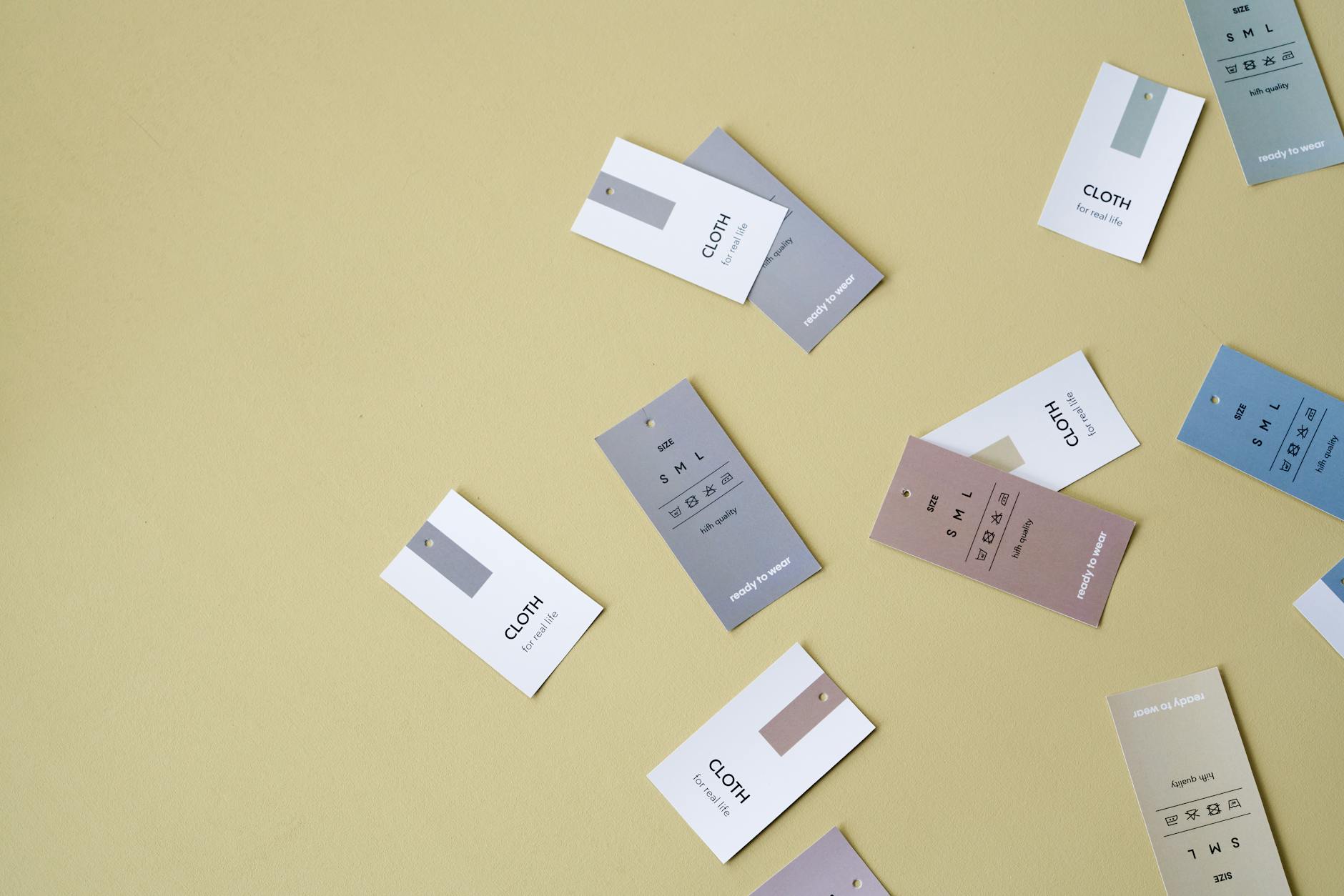
Fabric care labels are one of those things we all know we should read, but rarely do until a favourite piece shrinks, fades, or comes out of the wash looking nothing like it went in. Whether you are sewing handmade clothing for yourself, your kids, or your customers, understanding fabric care labels is one of the most practical skills you can have. A label is not just a legal requirement. It is a direct line of communication from the fabric to you, and ignoring it is the fastest way to shorten the life of something you worked hard to make.
Why care labels matter more with specialty fabrics
Standard cotton from a chain store is fairly forgiving. But when you are working with digitally printed fabrics, stretch knits, or carefully curated fabric bases, the stakes are higher. A printed jersey that gets tumble dried on high can lose colour vibrancy and shrink enough to render a finished garment unwearable. This is especially relevant for anyone who orders custom digital prints and wants to protect that investment. If you have ever wondered how to get the most life from your prints, understanding the care label is the starting point. Our guide on how to wash digital print fabric without fading goes deeper into technique, but the care label is always step one.
The five main care symbols explained
Care labels use a set of internationally standardised symbols. Once you know what each shape means, the rest is just modifiers. Here is a breakdown of the five core symbols and what they are telling you.
The washing tub
A bucket shape with water represents washing. A number inside (30, 40, 60) refers to the maximum water temperature in degrees Celsius. A hand inside the bucket means hand wash only. A crossed-out tub means do not wash in water at all, which usually points to dry clean only. A single line under the tub means use a gentle cycle; two lines mean extra gentle (often for delicate knits and stretch fabrics).
The triangle
The triangle represents bleaching. A plain triangle means any bleach is safe. A triangle with two diagonal lines means only non-chlorine bleach. A crossed-out triangle means no bleach at all. For printed fabrics and bright colours, you will almost always see the crossed-out version, since bleach is one of the quickest ways to destroy a print or dye.
The iron
An iron shape tells you what heat level is safe for pressing. One dot means low heat (around 110°C), two dots means medium (up to 150°C), and three dots means high (up to 200°C). A crossed-out iron means do not iron at all. For digitally printed fabrics, the label will almost always specify low heat and pressing from the reverse side. Ironing directly on a print can cause it to crack, smear, or distort. If you are unsure, our article on how to iron printed fabric without ruining the design covers the safest techniques in detail.
The circle
A plain circle means dry clean only. A circle with a letter inside (such as P or F) gives the dry cleaner information about which solvents are safe. A crossed-out circle means do not dry clean. For most home sewists working with cotton, jersey, and printed fabrics, you will rarely see this symbol. It shows up more often on structured garments, tailored pieces, or fabric blends with unusual finishes.
The square
The square represents drying. A circle inside the square means tumble dry is safe. Dots inside the circle tell you the heat: one dot for low, two for medium, three for high. A square with a line across the bottom means dry flat (do not hang). A square with a curved line at the top means hang to dry. A crossed-out tumble dryer symbol is the one you need to respect most seriously. Tumble drying fabrics that should not be dried that way is one of the leading causes of shrinkage and colour loss.
Australian-specific things to keep in mind
Australia follows the GINETEX international care labelling system, so if you are ordering fabric or finished goods from overseas, the symbols should match. However, product labels in Australia are not always required to carry every symbol. Fabric sold by the metre, for instance, may have minimal or no labelling at all, which is why understanding the fabric type and asking your supplier matters. When you order printed fabric from a specialist like Fabric by TrishaMakes, the fabric base details are always clearly communicated so you know exactly what you are working with before you sew a single seam.
Reading fibre content alongside the symbols
Care labels always list fibre content as a percentage breakdown (for example, 95% cotton, 5% elastane). This information works hand in hand with the care symbols. Higher percentages of synthetic fibres generally mean lower heat tolerance. Fabrics with elastane or spandex should never go into a hot wash or high dryer cycle, as the elastic fibres break down and the fabric loses its stretch permanently. Natural fibres like cotton and linen can tolerate more heat but are more prone to shrinkage than synthetics. If you are new to interpreting fibre blends and how they affect sewing choices, our guide on how to make fabrics last longer ties these concepts together well.
Common mistakes people make with care labels
The most frequent mistake is assuming a fabric that has survived one incorrect wash will always survive it. Damage from heat and agitation is often cumulative. A jersey knit might look fine after one hot wash, then lose its shape entirely after the third. Other common errors include:
- Sorting clothes by colour but ignoring wash temperature requirements.
- Assuming all cotton can be washed on hot. Fine cotton prints often need cold water.
- Tumble drying because a label does not explicitly say not to (if there is no tumble dry symbol, default to air drying).
- Cutting out labels from finished garments and then forgetting the care requirements.
- Ignoring the ironing instructions and pressing directly on top of a printed surface.
A quick tip for handmade sellers
If you sell handmade items, including care instructions with your products is not just good customer service. It protects your reputation. A customer who washes a printed tote on hot and loses the design will often blame the maker, not their own washing habits. A small care card or swing tag with clear washing instructions costs almost nothing and goes a long way toward keeping your buyers happy and coming back. Think of it as one last quality touchpoint after all the work you put into making the piece.
Care labels are easy to overlook, but they contain everything you need to keep your fabrics looking exactly the way you made them. Once you know the symbols, reading them takes five seconds and can save you from costly mistakes. Make it a habit, especially when you are working with beautiful printed fabrics worth protecting.