
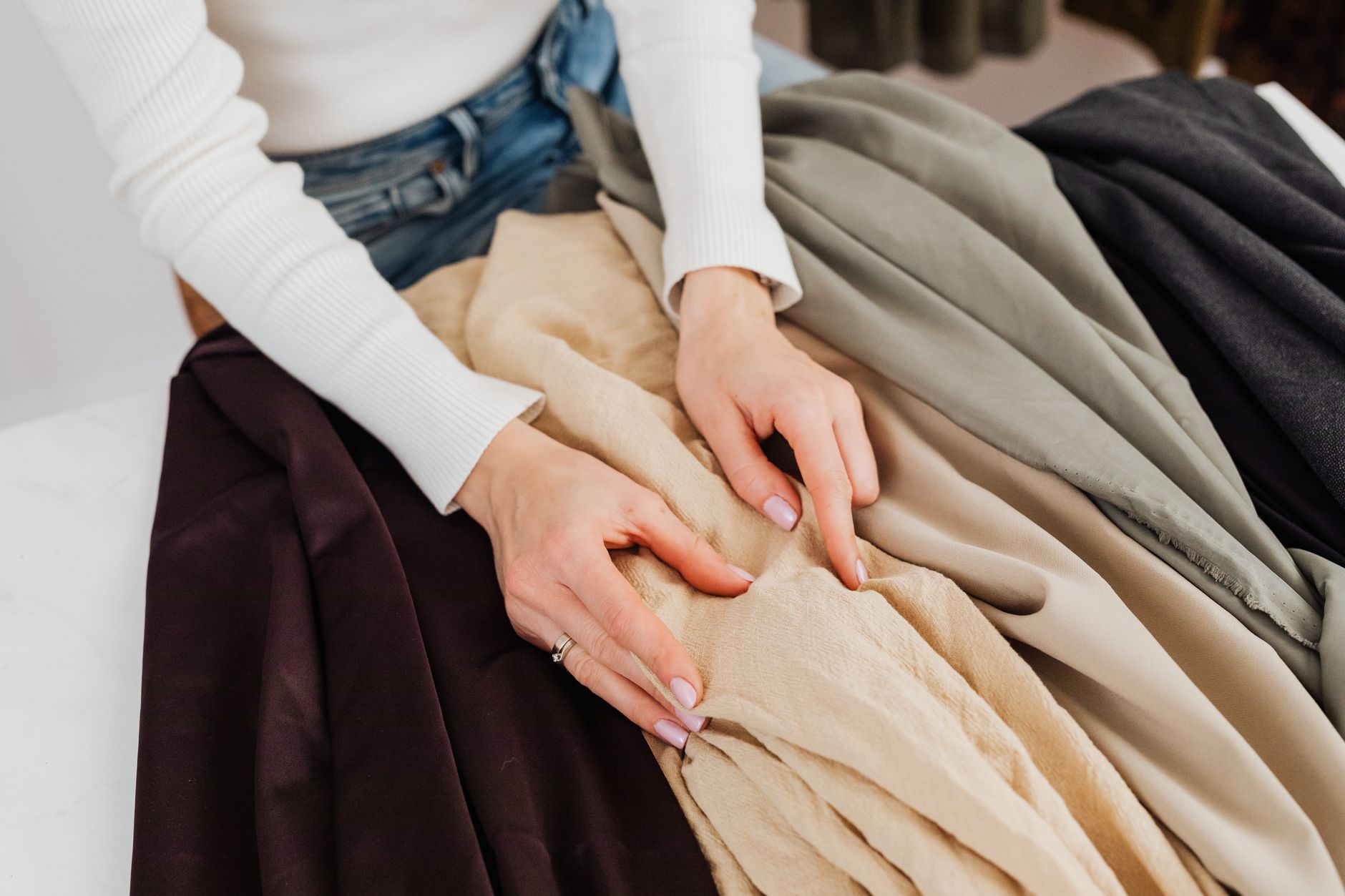
Pick up any piece of fabric and you'll feel something before you read a single label. That sensation, the drape over your palm, the crispness when you fold it, the warmth or coolness against your skin, is called the hand (sometimes "handle") of a fabric. It's one of the oldest textile terms in use, and it's also one of the most practical things to understand when you're choosing cloth for a sewing project.
Fabric hand isn't one single property. It's a combination of at least five qualities that work together: drape, softness, stiffness, smoothness, and resilience. Experienced sewists read all five at once, usually without thinking about it. If you're newer to fabric selection, naming these qualities separately is the fastest way to start making sense of what your hands are already telling you.
The five qualities that make up fabric hand
Drape is the most visible component. A fabric with good drape falls in long, fluid lines when held vertically. Rayon, modal, and lightweight silks drape beautifully. A stiff cotton canvas doesn't drape at all. Drape comes from fibre type, yarn twist, weave structure, and weight, all at once.
Softness describes the tactile feel against skin. It's partly fibre (cotton and modal feel softer than polyester), partly yarn (a tightly spun yarn feels harder than a loosely spun one), and partly finish (brushing, enzyme washing, and other treatments change softness significantly). Softness matters enormously for garments worn close to the body, less so for structured bags or home décor.
Stiffness (or body) is almost the opposite of drape, but both are useful. A quilting cotton with a bit of body holds its shape when cut into small pieces. Organza's stiffness creates volume in skirts. Neither quality is inherently better. It depends entirely on what you're making.
Smoothness covers surface texture. Run your hand in one direction across a piece of corduroy and then the other: the wale resists one way and slides the other. That's surface texture affecting hand. Smoothness also affects how a fabric moves through a sewing machine, how easily it frays, and how sharply seams press.
Resilience is the most underappreciated of the five. It describes how quickly a fabric recovers after being crushed, folded, or stretched. Wool is highly resilient, which is why wool tailoring forgives a day of sitting and walking. Linen is low-resilience, which is why linen wrinkles within an hour of being put on.
Why fabric hand matters more than fibre content alone
Two fabrics can share the same fibre content and still have completely different hands. A tightly woven cotton poplin and a brushed cotton flannel are both 100% cotton. They sew and wear nothing alike. The fibre content tells you part of the story. The weave structure, the yarn count, the finishing processes, and the GSM all contribute to how a fabric actually behaves in use.
This is why understanding fabric GSM works best alongside assessing hand rather than in isolation. A high GSM tells you a fabric is dense or heavy, but it doesn't tell you whether that weight comes from a stiff canvas construction or a soft, compact double-knit. GSM and hand together give you a much more complete picture before you commit to a cut.
Hand also changes with washing and wear. A crisp woven cotton softens with each wash. A cheap polyester that feels silky off the bolt can turn stiff and unpleasant after a few machine cycles. If you're making something that will be washed regularly, it's worth pre-washing your fabric before you assess its hand, because the washed hand is the hand you'll be living with.
How finishing treatments affect hand
Fabric finishes are applied after weaving or knitting and can dramatically alter hand without changing fibre or structure. Here are three common ones worth knowing:
- Mercerising: A treatment applied to cotton that increases lustre and smoothness, and improves dye uptake. Mercerised cotton feels silkier than untreated cotton of the same construction.
- Brushing or napping: Raises fibres to the surface of a woven or knit fabric. Creates the soft, fuzzy hand of flannels, fleeces, and some jersey fabrics. Also reduces the visibility of the underlying weave structure.
- Calendering: Passes fabric through heavy rollers under heat and pressure. The result is a smooth, polished hand and increased sheen. Often used on cotton shirtings and sateen weaves.
Digital print fabrics can also vary in hand depending on which finishing the base cloth received before printing. At Fabric by TrishaMakes, the base fabric is chosen specifically for how it holds vibrant digital prints, but also for how it feels and moves in finished garments and projects.
Matching hand to project type
The easiest way to think about this is to start with the end use. A gathered skirt needs drape. A structured tote bag needs body. A baby blanket needs softness and resilience. A quilting project needs a fabric that presses flat and holds a crease. Once you've named what the project requires, you can assess any fabric in your hands against that specific checklist.
Garments worn next to skin need softness above all else. If a fabric feels scratchy or rough when pressed against the inside of your wrist, it will feel the same against your collarbone. Don't talk yourself into it. For bags and structured projects, you can tolerate a stiffer, less soft hand, and often need it, to get the shape to hold. For home textiles like cushion covers or table runners, smoothness and resilience matter most because both resist everyday wear.
If you sew across multiple categories, it's worth building a small reference collection: labelled swatches of fabrics you've worked with before, annotated with your own hand notes. "Soft, good drape, low body" takes two seconds to write and saves you a lot of guesswork next time you're standing in front of a bolt. This kind of intentional stash-building is also the foundation of a considered approach to choosing fabric weight, which works hand in hand (no pun intended) with understanding hand itself.
Assessing hand when buying fabric online
Online fabric shopping removes the most natural hand-assessment tool you have: your fingers. But there are practical workarounds. Order sample cuts or small quantities of any fabric base you haven't worked with before. Check whether the product listing describes the fabric's drape, body, or finish. Look for words like "fluid", "crisp", "brushed", or "structured" rather than relying only on fibre content and GSM.
Community feedback helps too. If a fabric has been used in finished projects, look for sewist reviews that describe how it behaved in the making: did it press well, did it fray aggressively, did it stay soft after washing? That's all hand information, even if nobody calls it that.
At Fabric by TrishaMakes, fabric bases are selected and described with home sewists in mind, so you can make a confident choice before your preorder arrives. Fabric by TrishaMakes air freights preorder fabric to Brisbane customers quickly, but a well-chosen base makes every day of the wait worthwhile.
Once you start assessing hand deliberately, you'll notice you're making fewer fabric regrets. The bolt that looked perfect online but felt wrong on arrival, the garment that didn't drape the way you imagined, the bag that went floppy after one use: these are almost always hand mismatches. Name the five qualities, match them to the project, and the guesswork mostly disappears.