
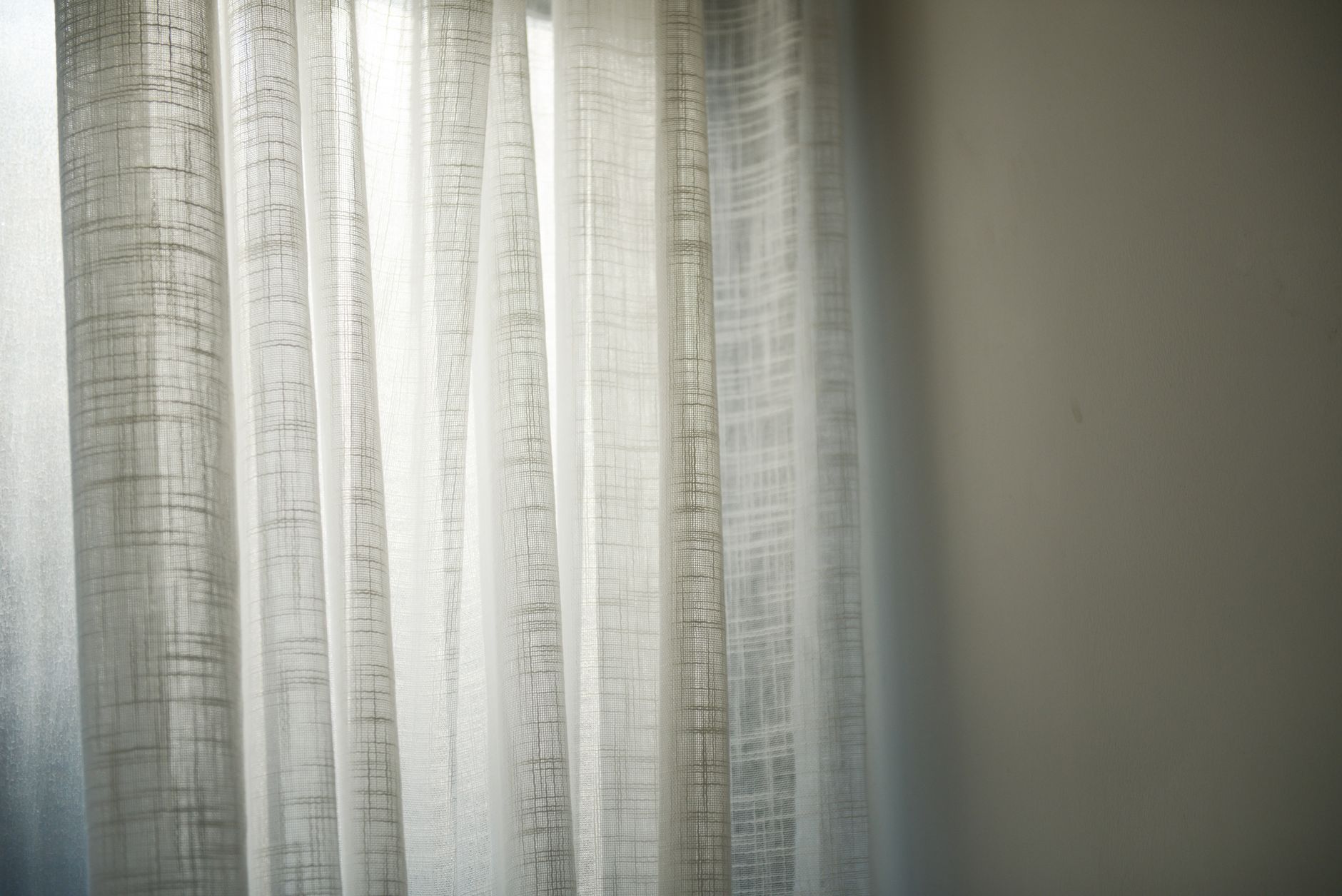
Fabric opacity is the degree to which a material blocks light. It sits alongside weight, drape, and stretch as a fundamental property that shapes how a finished piece looks and wears. Cut a blouse from a fabric that's too sheer and you'll need to line it. Skip the test on a pair of leggings and you might not find out until you're mid-squat at the gym. Checking opacity early costs nothing. Fixing the problem later costs time, materials, and sometimes the whole project.
Why opacity matters more than most sewists realise
Fabric sheerness isn't just a modesty question. It affects how a print reads on the finished piece. A design with fine linework or subtle colour detail can look washed out or muddy when the fabric beneath it is lighter or darker than expected. This is especially true for digital prints, where the base fabric's opacity directly influences colour depth and contrast.
Opacity also changes under different lighting. A fabric that looks perfectly solid in your sewing room may turn almost translucent outdoors in bright Australian sun. That's not a defect in the fabric. It's physics. The only way to catch it before the project is finished is to test it deliberately.
Understanding opacity becomes even more important when you think about fabric GSM. A higher GSM doesn't automatically mean a more opaque fabric. Loosely woven linen at 160 GSM can be more sheer than a tightly woven cotton at 120 GSM. Weight tells you about mass per square metre. Opacity tells you about light transmission. They're related, but not the same thing.
What makes a fabric more or less opaque
Several factors determine how much light passes through a fabric:
- Fibre type: Synthetic fibres like polyester tend to be denser and block light well. Natural fibres like linen and cotton vary widely depending on how tightly they're woven.
- Thread count and weave structure: A tight plain weave blocks more light than an open weave or a loosely knit structure. Voile, for example, is plain weave cotton but it's designed to be sheer.
- Fabric finish: Some fabrics are treated to increase opacity, either with a coating or by doubling the weave. Others are finished to enhance drape, which can reduce density.
- Colour: Dark colours absorb more light and appear more opaque. Pale or white fabrics transmit more light even at the same GSM and weave.
How to test opacity at home before you cut
The simplest test takes 30 seconds. Hold the fabric up to a window or a bright lamp and look through it. If you can read text or see your hand clearly, the fabric is sheer enough to require lining for most wearable projects. If you can see a vague outline but no detail, it's borderline. If it blocks light almost entirely, it's opaque enough for unlined wearables.
For a more controlled test, place the fabric flat on a piece of white paper with bold black text printed on it. Press the fabric flat and try to read the text through it. One layer unreadable is a good result. One layer readable means you'll want to account for that when choosing your project or planning a lining.
If you're working with a stretch knit, test it under tension too. Many fabrics that look fine relaxed become significantly more sheer when stretched across the body. Leggings and fitted tops especially need this check. Pull the fabric to the stretch you'd expect in wear, then hold it up to the light.
When a fabric is too sheer: your options
Discovering a fabric is more translucent than you'd like doesn't mean scrapping the project. There are practical ways to handle it.
Lining: The most reliable fix. A lining fabric added to the inside of a garment or bag immediately solves the opacity problem without altering the outer print. Choose a lining in a colour that complements the print rather than fighting it.
French seams and facing: For lightweight blouse fabrics, clean finishing techniques reduce distraction. They won't make the fabric more opaque, but they ensure the inside of the garment looks intentional rather than unfinished.
Double-layering: For some projects, two layers of the same fabric sewn together add enough density to solve the problem while keeping the print consistent on both sides. This works well for table runners, placemats, and reversible accessories.
Choosing a different base fabric: If you're ordering custom digital printed fabric and opacity is critical for the intended project, selecting a base with higher GSM and tighter weave from the start is the cleanest solution. It's worth checking which fabrics hold vibrant digital prints best alongside their opacity ratings, since the best printing bases tend to be both high-opacity and colour-accurate.
Opacity and digital printed fabrics
Digital printing requires a fabric base that holds ink without excessive bleed. The bases that do this best, tightly woven polyester-cotton blends and knit bases with good surface tension, also tend to have naturally high opacity. That's a useful coincidence for anyone sewing wearables from custom prints.
Fabric by TrishaMakes sources print bases specifically chosen for their ability to hold fine detail and colour fidelity. Opacity is part of that selection. If you're ever unsure whether a specific base suits an unlined project, the best approach is to order a small test cut before committing to a preorder quantity. Most experienced sewists who work with custom digital prints keep a reference swatch for exactly this reason.
It's also worth knowing how the fabric was printed before you assume opacity is fixed. Some reactive dye processes print through the full thickness of a fabric, producing the same colour on both sides. Pigment-based digital printing sits more on the surface, which can affect how the fabric reads when backlit. How digital fabric printing works covers the difference in more detail, and understanding the print method helps you predict how opacity will behave in use.
A quick reference by fabric type
As a general starting point: polyester knits and woven polyester blends are reliably opaque. Cotton poplin and quilting cotton at standard weights are opaque in most colours. Cotton jersey ranges from borderline to fully opaque depending on GSM and colour. Linen is often more translucent than people expect, especially in lighter weights. Modal and bamboo knits sit in the borderline category and benefit from the stretch test before cutting for fitted wearables.
None of this replaces the hold-it-to-the-light test. Every bolt is different, and fabric descriptions on product listings don't always mention opacity directly. Thirty seconds of testing before you lay out your pattern is the fastest quality check in sewing.