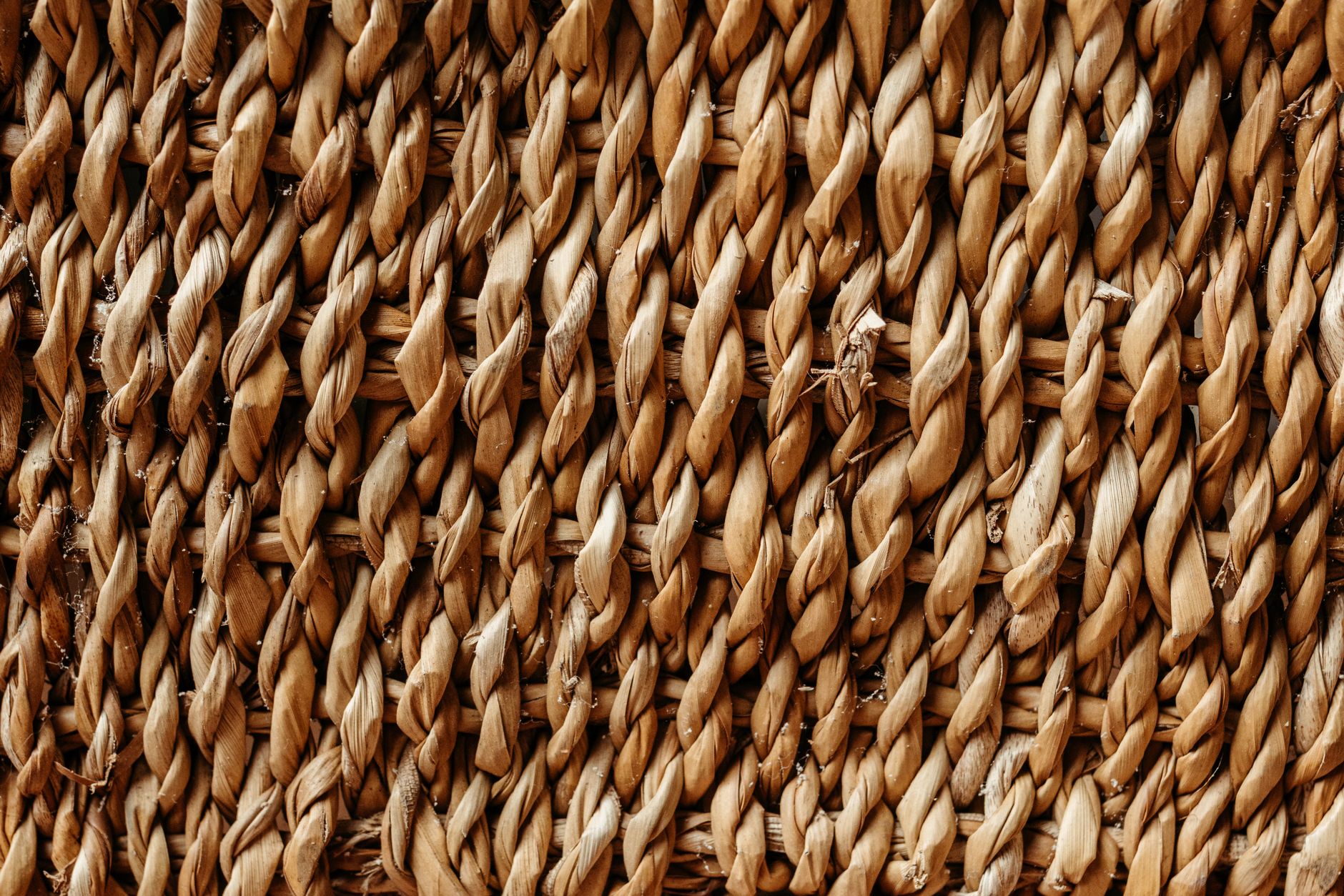
Thread count is a number most sewists have seen on bedding packets and fabric listings, but few can say with confidence what it actually means or whether it should change what they buy. The short version: thread count measures how many threads are woven into one square inch of fabric, counting both the warp threads (running lengthwise) and the weft threads (running crosswise). A fabric with 150 warp threads and 150 weft threads in one square inch has a thread count of 300. That's the whole calculation.
What the number tells you is a little more complicated. And what it doesn't tell you matters just as much.
What thread count actually measures
Thread count applies only to woven fabrics. It doesn't translate to knits, which have a loop-based structure rather than an interlaced one. For knits, fabric weight (measured in GSM) and stretch percentage are far more useful specs. If you're working with jersey, French terry, or anything with stretch, thread count is irrelevant. Understanding fabric GSM and why it matters will serve you better for those projects.
For woven fabrics, a higher thread count generally means a tighter, finer weave. That produces a smoother surface, less visible texture between threads, and a softer drape in lighter weights. Quilting cottons typically sit around 60 to 80 threads per square inch. Percale sheeting runs from 200 to 400. High-end sateen fabrics can reach 600 or higher, though the numbers become less reliable at that end of the scale.
The reliability problem is real. Some manufacturers inflate thread count by using multi-ply yarns (threads twisted from two or more finer strands) and counting each strand separately rather than each thread. A 600-thread-count fabric made from low-quality multi-ply yarn can feel worse than a genuine 300-thread-count fabric made from single-ply long-staple cotton. The number doesn't lie exactly, but it doesn't tell the whole story either.
When thread count matters for sewing projects
Thread count becomes relevant in a few specific situations. Fine garment sewing is one of them. If you're making a shirt, blouse, or dress that needs to drape smoothly against the body, a higher thread count woven fabric will behave more predictably and feel better against skin. The denser weave resists fraying, holds a seam more cleanly, and presses to a crisper finish.
Quilting is another. Quilters who piece intricate patchwork by hand or machine benefit from a tighter weave because the needle passes through cleanly without distorting the surrounding threads. A loosely woven fabric with a low thread count can shift under the needle, making precise seaming difficult. It also wears faster at seam intersections over time.
Bag making and home décor are places where thread count matters less. Canvas, denim, and heavier twills have low thread counts by design. Their durability comes from yarn weight and weave structure, not thread density. For a sturdy fabric tote or a cushion cover, a dense, heavy weave at a low thread count will outlast a lightweight high-thread-count fabric every time. If you're choosing fabric for travel accessories and bags, prioritise abrasion resistance over thread count entirely.
Thread count and digital print quality
This is where thread count gets interesting for custom fabric ordering. Digital printing deposits ink directly onto the surface of the fabric, and a tighter weave generally produces a sharper print. With a low thread count, the ink sits in the gaps between threads as well as on the fibres themselves, which can soften fine detail and reduce colour density. With a higher thread count, the print surface is more uniform and the result is cleaner.
That said, thread count is only one factor. Fibre content, fabric finish, and ink absorption all shape the final result. A tightly woven polyester will usually hold a sharper digital print than a tightly woven cotton of the same thread count, because polyester fibres are non-absorbent and the ink sits on the surface rather than wicking into the fibre. Cotton absorbs more ink, which can soften edges slightly but also produces richer, more saturated colour in large fills.
Fabric by TrishaMakes prints on a curated range of fabric bases selected specifically for how well they carry a digital print. The thread count and fibre content of each base are matched to the type of design it performs best with, so you don't have to work it out from spec sheets alone.
The limits of thread count as a buying guide
Thread count is one data point, not a verdict. Yarn quality, fibre length, weave type, and finishing treatment all affect how a fabric feels and performs. A low-count canvas can outlast a fine percale in heavy use. A mid-count linen will wrinkle in ways a high-count cotton won't, regardless of the number. Knowing a fabric's thread count without knowing its fibre content and weave structure is a bit like knowing a car's top speed without knowing whether it has brakes.
The most reliable way to judge a woven fabric is still to handle it. Check how it drapes, how it responds to slight tension, whether it frays easily at the cut edge, and how it feels between your fingers. Those physical properties tell you what thread count is trying to summarise in a single number. Thread count is a shortcut that works until it doesn't, and knowing its limits makes it genuinely useful rather than misleading.
If you're new to reading fabric specs and want a foundation to build from, woven fabric types explained covers the full range of woven structures, from quilting cotton to canvas, in a way that puts thread count in proper context.