
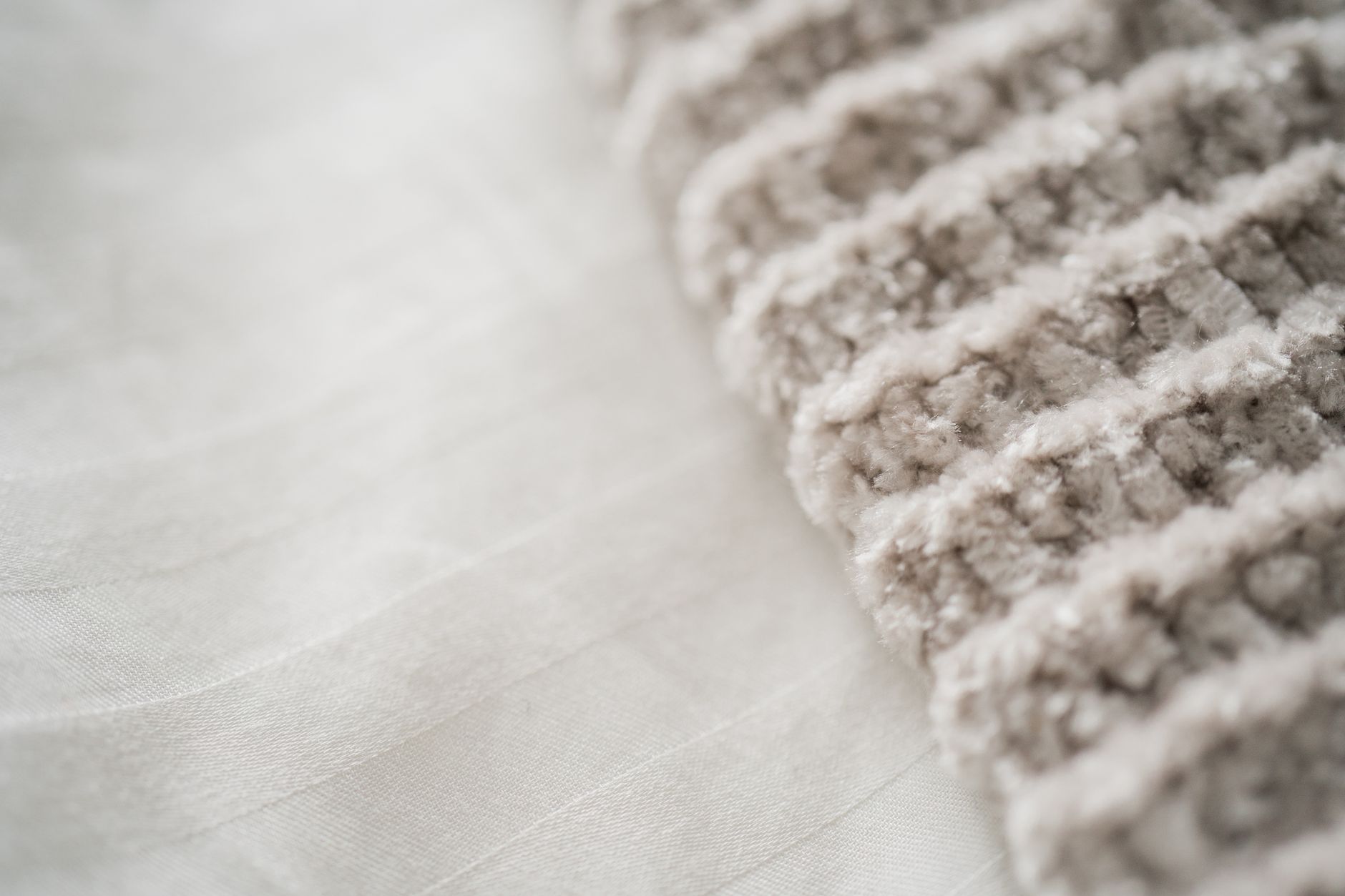
Scuba fabric is a double-knit polyester with a smooth, matte surface and a firm, substantial hand. It doesn't fray, it holds its shape under heat and pressure, and it barely stretches compared to most jersey-style knits. For sewists who find slippery or flimsy fabrics frustrating, scuba feels almost like a reward: it cuts cleanly, stays put on the table, and sews up without drama. But that same firmness makes it the wrong choice the moment a project needs drape, breathability, or a softer hand against the skin.
What scuba fabric is actually made of
Most scuba is a polyester-spandex blend, typically around 95% polyester and 5% elastane. The polyester gives it structure and that characteristically smooth surface. The elastane adds just enough give to let it move with the body without stretching out of shape. Some scuba variants use a nylon base instead of polyester, which produces a slightly softer handle, though the construction logic is the same: tightly knit, double-layered, stable.
The fabric gets its name from neoprene scuba diving suits, which share a similar thick, smooth look. It isn't neoprene and doesn't behave like it in water, but the visual resemblance stuck.
In terms of GSM, scuba sits heavy. Most rolls come in at 220–300 GSM, which puts it well above standard cotton jersey (around 150–180 GSM) and closer to the weight range of understanding fabric GSM and why it matters is worth reading before ordering, especially if you're comparing fabric bases for a structured project.
What scuba fabric is genuinely good for
Structured garments are where scuba earns its reputation. Bodycon dresses, pencil skirts, fitted jackets, and structured bodices all suit scuba well because the fabric holds the intended silhouette rather than collapsing under its own weight. It's also forgiving on fit: a small error in seam allowance doesn't show the way it might on a fine jersey.
Scuba works well for bags, pouches, and fabric accessories where you want the piece to stand upright or hold a defined shape without interfacing. Because it doesn't fray, raw edges are stable even without finishing. That's a genuine time-saver for small sewn goods.
Digital prints show up clearly on scuba's smooth surface. Colours print with good saturation, and the flat surface doesn't interrupt fine detail the way a textured weave might. If you're planning a print-forward garment that needs to look striking at a glance, scuba handles that well.
Where scuba falls short
Scuba doesn't breathe. In an Australian summer, wearing a scuba garment for more than a couple of hours is uncomfortable. The polyester construction traps heat, and because the fabric is thick, there's no air movement. For warm-weather sewing, it's the wrong base entirely. The best fabrics for Australian summer clothing projects cover this in detail, and scuba doesn't feature among them for good reason.
It also doesn't drape. Projects that rely on fabric flowing or gathering softly won't get that from scuba. A flowy midi skirt, a gathered sleeve, a ruffled collar: these all need a fabric with give and weight distribution that scuba simply won't provide. Force it into those applications and the finished piece looks stiff and awkward.
Scuba is also sensitive to pressing. Too much heat on a polyester-heavy blend and the surface dulls or, in bad cases, melts slightly. A pressing cloth and a low-to-medium iron setting are non-negotiable. Skip the steam on the first press and work cautiously from there.
How to sew scuba fabric without problems
Use a ballpoint or stretch needle, size 75/11 or 80/12. Scuba is a knit, and a sharp needle risks skipping stitches or leaving visible holes at the seam line. A ballpoint slides between the fibres rather than piercing them.
A narrow zigzag stitch (around 1.5–2mm width, standard length) keeps seams flexible without letting them pull apart under movement. If you have a serger, a 4-thread overlock finishes the seam and adds strength. For visible topstitching, a twin needle gives a clean, professional result.
Don't stretch scuba as you feed it through the machine. It has enough natural recovery that forcing it creates seam distortion. Let it feed at its own pace, with gentle hands guiding rather than pulling.
Mark pattern pieces with tailor's chalk or a water-soluble pen. Pins work fine because scuba doesn't shift the way slippery fabrics do, but wonder clips are tidier if you're sewing a smooth, uninterrupted seam line and don't want pin marks on the surface.
Is scuba worth using for digital print fabrics?
For certain applications, yes. The smooth polyester surface takes ink evenly, and because the fabric is stable, the print doesn't distort when you handle or sew it. A detailed repeating pattern on scuba looks the same cut and sewn as it did on the bolt, which matters when you've invested in a custom print.
It's worth checking that the digital print has been applied to a scuba base specifically designed for the process. Not all thick knits accept reactive or pigment dyes the same way. A polyester scuba needs disperse dye or a sublimation process; standard reactive dyes used on cotton won't bond correctly and will wash out quickly. Fabric by TrishaMakes prints to polyester scuba using an appropriate process for the base, so the print integrity holds through washing when cared for correctly.
If you're deciding between scuba and another knit for a custom print project, the choice usually comes down to structure versus softness. Scuba wins when you need a garment to hold a shape. If you're chasing something that moves and breathes, look at modal, cotton lycra, or a lightweight French terry instead.
A quick comparison: scuba vs similar fabrics
Ponte knit is the closest relative. Both are double knits with a smooth surface and good structure, but ponte is generally lighter (around 200–240 GSM), more breathable, and slightly softer. If scuba feels too heavy for a project, ponte is the logical step down. Neoprene fabric is sometimes confused with scuba in listings, but true neoprene is water-resistant and spongy in a way scuba is not. For sewing garments, neoprene is usually overkill. Bonded fabrics are another category that looks similar in photos but involves two layers laminated together, which gives a completely different sewing experience.
Scuba sits in a specific niche: structured, smooth, print-friendly, and low-fuss to cut. Know those four qualities going in and you'll use it in exactly the right projects.