
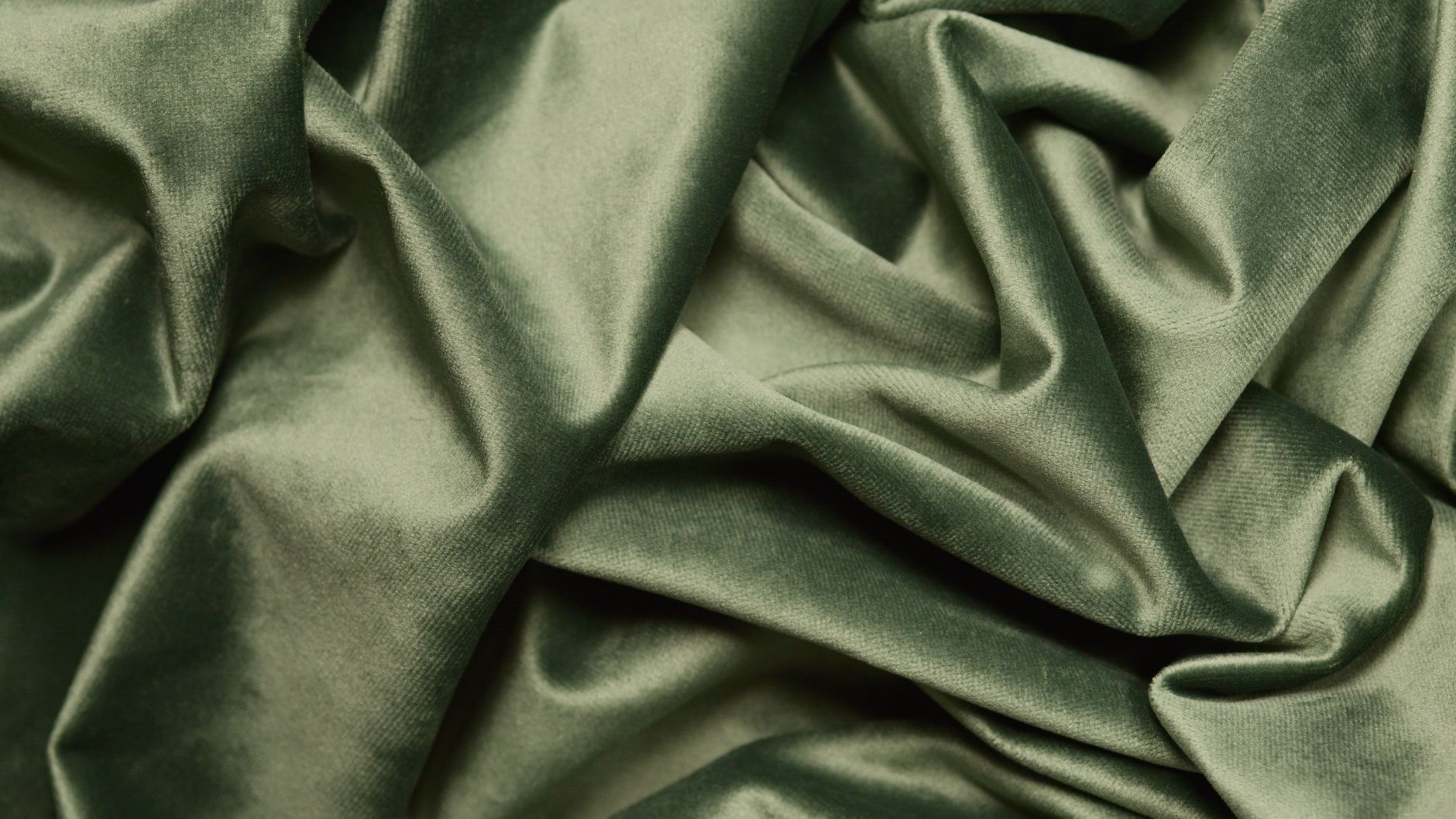
Velvet fabric has a reputation for being difficult, and that reputation isn't entirely wrong. The pile shifts, the needle marks stay, and cutting on the bias can feel like you're wrestling something alive. But velvet also does something no other fabric can: it catches light in two directions at once, giving finished garments and home décor a depth that's impossible to fake with a plain woven or printed alternative. Worth the effort? For most projects, yes. But only if you understand what you're working with before you cut a single centimetre.
What velvet actually is
Velvet is a woven fabric with a cut pile. The base cloth is woven first, then a second set of threads is woven in loops on top and cut to create the characteristic soft surface. The direction those cut fibres face is called the "pile," and it's the pile that gives velvet its visual richness and its tendency to frustrate sewists who ignore it.
Historically, velvet was made from silk. Pure silk velvet still exists, but it's expensive and unforgiving. Most velvet sold for sewing today is either polyester, cotton, rayon, or a blend. Each behaves differently on the machine, responds differently to heat, and prints (or doesn't print) differently if you're working with digitally printed fabric options.
The main types of velvet and how they differ
Not all velvet is the same. The type you choose matters more than most sewists realise before their first experience with a shifted nap or a crushed seam.
- Stretch velvet is the easiest to sew. It has a spandex or elastane component, which forgives minor grain-line errors and reduces shifting. It's the go-to for garments that need movement.
- Crushed velvet has a deliberately irregular pile direction, which means the light-shift effect is built into the fabric. Seam marks and pressing errors are far less visible, making it friendlier for beginners.
- Devore velvet (burnout velvet) uses acid or heat to dissolve sections of the pile, leaving a pattern of sheer and pile areas. It's a printed-style finish that gives a lace-like result without lace.
- Velveteen is often confused with velvet but is woven differently, with a shorter, denser pile and a firmer hand. It's usually cotton and behaves much more like a standard woven fabric.
- Panne velvet has the pile pressed flat in one direction, giving it a high sheen and a slippery surface. It's used heavily in dancewear and costume work.
Velvet and digital printing
Digital printing on velvet is possible, but the pile absorbs ink differently than a flat surface. The result is typically softer and slightly muted compared to printing on a cotton jersey or a woven base. If you're choosing velvet for its printed design rather than its texture, it's worth testing a small sample of the specific velvet base first. Stretch velvet tends to hold digital prints more consistently than heavier silk-style velvet because the surface is more uniform.
If print vibrancy is your priority, you may get sharper results from a flat fabric. Understanding which fabrics hold vibrant digital prints best will help you decide whether velvet is the right base for your design or whether a different fabric will serve the artwork better.
Cutting velvet without the chaos
Velvet shifts. That's non-negotiable. But the shifting is manageable with the right setup.
Always cut velvet as a single layer. Folding it doubles the shifting risk and almost guarantees one cut piece that's slightly off-grain. Use pattern weights rather than pins, which leave permanent marks in the pile. Cut with the pile running up the garment for a richer colour, or down for a lighter, more brushed look. Choose your direction before you cut, and stick with it across every piece.
A rotary cutter on a self-healing mat gives cleaner edges than scissors on most velvet types. For heavier velvets, long, sharp shears and deliberate cuts work better than a rotary cutter that can drag the pile.
Sewing velvet on a machine
Velvet creeps under the presser foot. Two fixes work consistently: a walking foot (which feeds both layers evenly) or tissue paper sandwiched between the velvet and the feed dogs, torn away after stitching. A walking foot is worth the investment if you sew velvet more than once a year.
Use a slightly longer stitch length than normal, around 3 mm, to avoid perforating the base weave too densely. A sharp needle in size 80/12 or 90/14 suits most velvet weights. Sew with the pile direction, not against it, to reduce drag.
Seam allowances in velvet need finishing. The pile sheds. A serger is ideal, but a tight zigzag stitch on each raw edge does the job without a second machine.
Pressing velvet without crushing the pile
Standard ironing will crush the pile flat. Once crushed, it's difficult to restore. The correct method is to use a velvet board (a board covered in fine wire loops that let the pile hang free) and steam from above, not touching the fabric directly. Hold the iron a few centimetres above the surface and let the steam do the work.
If you don't have a velvet board, hang the finished seam over the end of the ironing board, pile facing down against the narrow end, and steam from the back of the fabric. It's slower but effective for seams and hems.
For a broader look at pressing printed and textured fabrics without damage, the guide on how to iron printed fabric without ruining the design covers techniques that apply to several specialty fabric types, including velvets with surface prints.
What velvet works best for
Velvet is a statement fabric. It suits projects where the tactile quality is part of the appeal. Evening and formal wear, structured jackets, statement cushion covers, headbands, Christmas stockings, book sleeves, and jewellery rolls are all strong choices. Garments for everyday wear in velvet require more care in washing and storage, which is a practical consideration before you commit a metre and a half to a pair of wide-leg trousers.
Velveteen, the cotton relative, suits quilting and children's clothing better than standard velvet because it washes with less fuss and doesn't require the same careful pressing routine.
Whatever you're making, velvet rewards slow, deliberate work. It doesn't forgive rushing. Treat the pile direction as a non-negotiable, press carefully, and cut one layer at a time. Projects made from velvet get noticed, and that noticeability is exactly what makes the extra effort worthwhile.