
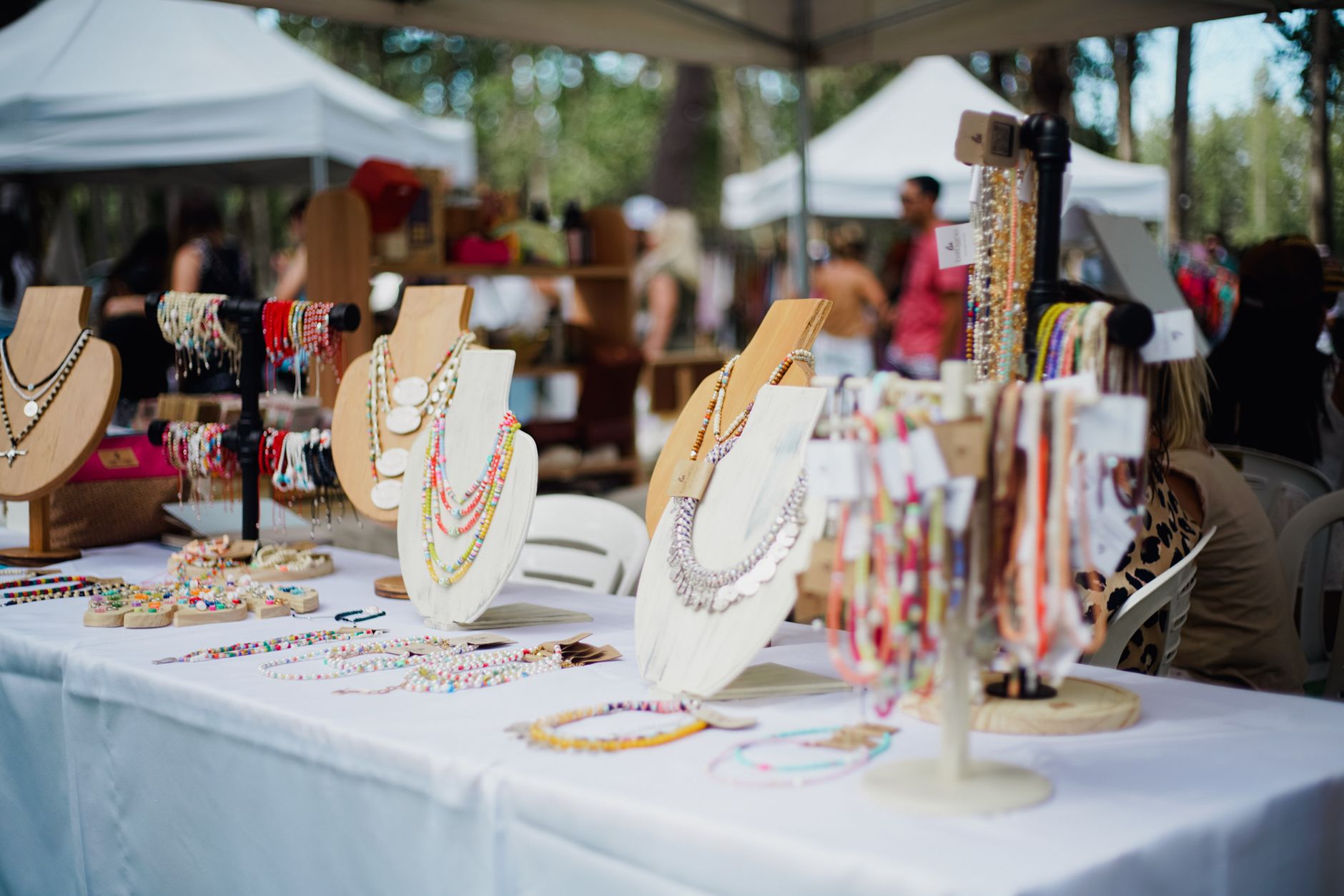
Your market stall bio is doing a job that most sellers underestimate. A customer walks past, something catches their eye, they pick it up, and then they glance at your signage or your printed about card to figure out who you are. That bio has about fifteen seconds to answer three questions: what do you make, why does it matter, and why should they trust you? Most handmade bios answer none of them clearly.
Why a market stall bio is different from an online one
An online bio works differently to a physical one. On Instagram or your website, a reader can scroll back, click around, and get a fuller picture of who you are over time. At a market, they're standing in front of your table, probably in the sun, with three other stalls competing for their attention. Your bio needs to land in one pass.
It's also not just text on a screen. A market stall bio typically lives on a folded card, a banner, a small framed print, or a hang tag. That means length is a physical constraint, not just a stylistic one. You're writing for a format that might give you 60 words, not 600. Every word has to carry weight.
The principles that make a strong Instagram bio still apply here, but the execution is tighter and more specific to the physical moment of discovery.
What to include in your stall bio
A good market stall bio covers four things. Not in this exact order, but all four need to be present.
- Who you are. Your name or your business name, stated plainly. Not "the maker behind the brand." Just the name.
- What you make. One specific sentence. "I sew custom fabric pouches, bags, and accessories using digital printed fabric from Brisbane" beats "I create unique handmade items for the modern home."
- Why you make it. One reason. It doesn't have to be profound. "I started sewing when I was pregnant and couldn't find prints I actually liked" is honest and specific. It connects.
- A soft signal of quality. Something that tells the customer the product is worth the price. Materials matter here. "All fabrics are digitally printed in Brisbane and pre-washed before sewing" is a confidence signal, not a boast.
The most common mistakes in handmade stall bios
Vague openers kill engagement before it starts. "Welcome to my little corner of creativity" has appeared on approximately ten thousand market stalls. It communicates nothing and wastes the first line. Start with who you are or what you make.
Overclaiming is equally damaging. "Passionate," "unique," and "one of a kind" are words buyers have learned to ignore. They're not claims, they're filler. A buyer holding a fabric pouch can see it's handmade. They don't need the bio to tell them it's unique. Tell them something they can't see at a glance: where the fabric comes from, how long you've been making, what the product solves.
Missing the local angle is a missed opportunity. Market shoppers support handmade precisely because they want to buy local. If you're Brisbane-based, say Brisbane. If the fabric is printed in Australia, say that. Local specificity builds trust faster than any adjective.
How to write the first draft
Start with a longer version. Don't try to write 60 words first. Write everything you'd want a customer to know, then cut. Write two or three paragraphs covering your story, your materials, your process, and what makes your products worth buying. Then strip it back to the core.
Read it out loud. If you'd feel awkward saying it to a stranger's face, rewrite it. A market stall bio should sound like you talking to a customer, not a press release about yourself.
Then test the format. Print it in the size you'll actually use it. If you can't read it comfortably from 60 centimetres away, the font is too small or the text is too dense. Buyers won't lean in to read a cramped card.
Connecting your stall bio to your online presence
A market stall bio doesn't exist in isolation. Most buyers who love what they find at a market will look you up online before they buy again. Your stall bio, your Instagram bio, your website about page, and any printed packaging need to tell a consistent story about who Fabric by TrishaMakes is and what it offers. A buyer who reads one version of your story and then finds a completely different one online loses confidence.
Think of your stall bio as the shortest possible version of your full brand story. If your handmade business about page does its job well, the stall bio should feel like a recognisable excerpt of it, not a separate document.
Add a QR code that links directly to your shop or your Instagram. Print it on the same card as your bio. Keep it small. A buyer who loves your work at a stall and can jump straight to your online shop is far more likely to become a repeat customer than one who has to hunt for you later.
A short example to benchmark against
Here's what a strong 60-word stall bio looks like in practice:
"Hi, I'm Trish. I design and sew handmade bags, pouches, and accessories using custom digital printed fabric, all sourced and printed in Australia. Every piece is made to order in my Brisbane studio. I started sewing when I couldn't find fabric prints I actually loved, so I started designing my own. All products are pre-washed and ready to use."
It names the maker, states what's made, names the materials, gives a location, and includes a founding reason that's personal without being sentimental. That's the template. Adjust it to your actual story, your actual products, and your actual materials.
One more thing worth noting
Your bio is not permanent. Markets shift, your range evolves, and what felt like the right story two years ago might not fit now. Review your stall bio every six months. If you've added a new product category, updated your fabric supplier, or changed your focus, the bio should reflect it. A stall bio that's accurate and current does more work than a polished one that's out of date.
If your stall includes any seasonal or preorder items, a small secondary card explaining how preorders work will save you from answering the same question fifty times a day. Building a proper waiting list for your preorder customers means the market isn't just a single sale, it's the start of a longer relationship.