
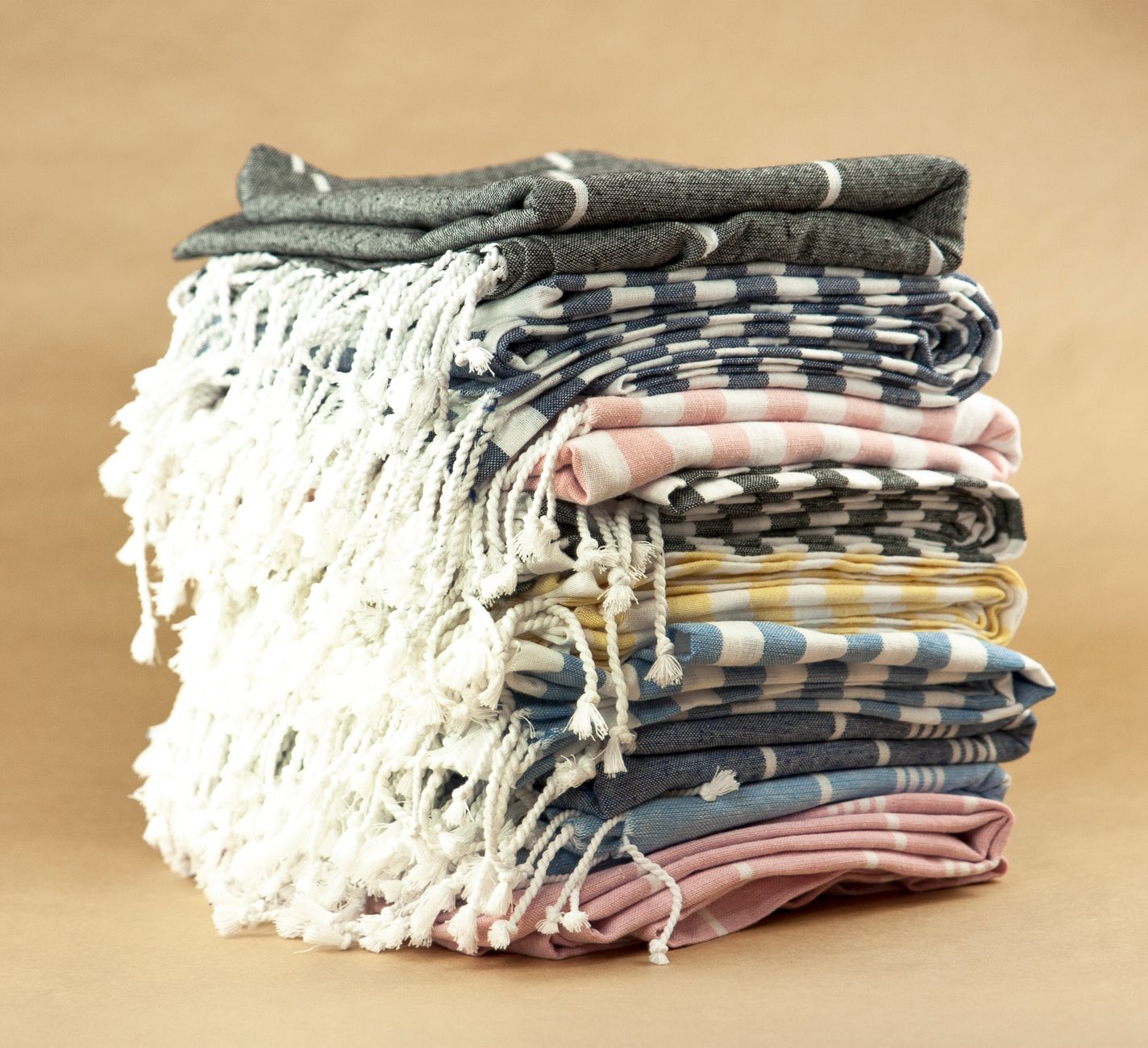
A fabric tea towel might be the most underrated sewing project in your list. It uses less than half a metre of fabric, takes under an hour from cutting to finished seam, and the result is something people actually reach for every day. If you're looking to use up a favourite print without committing to a large make, this is it.
What fabric works best
The ideal tea towel fabric is absorbent, flat-woven, and strong enough to survive frequent washing. Quilting cotton and cotton woven both work well here, with quilting cotton being the easier choice for beginners. Linen is the premium option: it absorbs water quickly, releases moisture just as fast, and gets softer with every wash rather than scratchier.
If you want to go the linen route, it's genuinely worth the extra effort. The finished result drapes beautifully, prints hold their vibrancy well, and a linen tea towel gifts far better than a cotton one. You can read more about why linen fabric is worth the extra effort if you're considering it for this project.
Avoid anything stretchy, loosely woven, or with a pile. Jersey, minky, and fleece all make terrible tea towels. They won't absorb, they'll pill, and they're frustrating to hem neatly. Stick to a woven base with a tight, flat weave.
For digital printed fabric, a woven base picks up colour beautifully and gives you a crisp, flat surface that shows off detailed prints without distortion. Fabric by TrishaMakes prints onto woven bases that hold their colour well through repeated washing, which matters for something you'll launder weekly.
What you'll need
- 45cm x 70cm of fabric (or adjust to your preferred size)
- Matching thread
- Rotary cutter or sharp fabric scissors
- Ruler and cutting mat
- Iron and ironing board
- Sewing machine with a straight stitch
- Optional: a small piece of ribbon or twill tape for a hanging loop
How to cut and prepare your fabric
Start by pre-treating your fabric before you cut. Woven cotton and linen both shrink on the first wash, and a tea towel that puckers after laundering is disappointing to give or receive. A warm machine wash followed by a press while still slightly damp will do the job. For detailed guidance on this step, the pre-treatment process is covered well in this guide to pre-treating fabric before sewing.
Once pre-treated and pressed flat, cut your fabric to size. 45cm x 70cm is a standard kitchen tea towel size and fits neatly on a cutting mat. Use a rotary cutter against a ruler for the cleanest edge. Uneven cuts make the hem harder to press and the finished towel harder to square up.
How to sew the hem
A double-fold hem gives you a neat, durable finish with no raw edges. Press 1cm to the wrong side all the way around, then press another 1cm. Pin as you go, especially around corners. Take your time at the corners: fold them neatly at a 45-degree angle rather than bunching the fabric, and trim any bulk if you're using linen or a heavier cotton.
Stitch around the entire perimeter close to the inner fold, roughly 2mm from the edge. Pivot carefully at each corner with the needle down to keep the fold tight. A single thread colour that matches the fabric face looks clean and professional. If you're using a bold print, a matching thread on the front and a neutral on the bobbin both work fine.
Backstitch at the start and end of your stitching line, then trim any threads close to the fabric. Give the finished towel a final press. This step makes a noticeable difference to the overall look.
Adding a hanging loop
A small loop at one corner makes the towel far more practical in a kitchen. Cut a 10cm length of ribbon or twill tape. Fold it in half, tuck the raw ends into one corner of the hem before you stitch it closed, and sew over it securely as you complete the perimeter stitch. Pull it to test the hold before you trim your threads.
It's a tiny detail, but it's the kind of finishing touch that makes a handmade tea towel feel considered rather than rushed.
Making it a gift worth keeping
A tea towel sewn from a print the recipient loves is a genuinely thoughtful gift. A botanical print, a bold geometric, or a personalised design printed on a woven base turns something functional into something meaningful. Pair it with a handmade fabric basket or a coordinating zipper pouch and you have a cohesive gift set from the same fabric print.
If you plan to sell tea towels at a market stall or in your online shop, they're one of those products that moves quickly at a low price point and requires almost no material cost. The sew time is short, the fabric requirement is small, and a well-chosen print does most of the selling for you.
For market sellers, folding and presenting the tea towels well matters as much as the sewing. Roll them and tie with twine, or fold them in thirds and display them fanned out in a basket. A print that reads clearly at a glance from 50cm away will outsell a beautiful but complicated print every time.
Caring for your finished tea towel
Printed woven fabric tea towels wash well if you treat the print gently. A cool or warm machine wash on a gentle cycle, and line drying rather than tumble drying, will keep the colours strong through dozens of washes. Avoid fabric softener, which builds up on woven fibres and reduces absorbency over time. Iron on the reverse side if you want a pressed finish. The towel will only get better with use.