
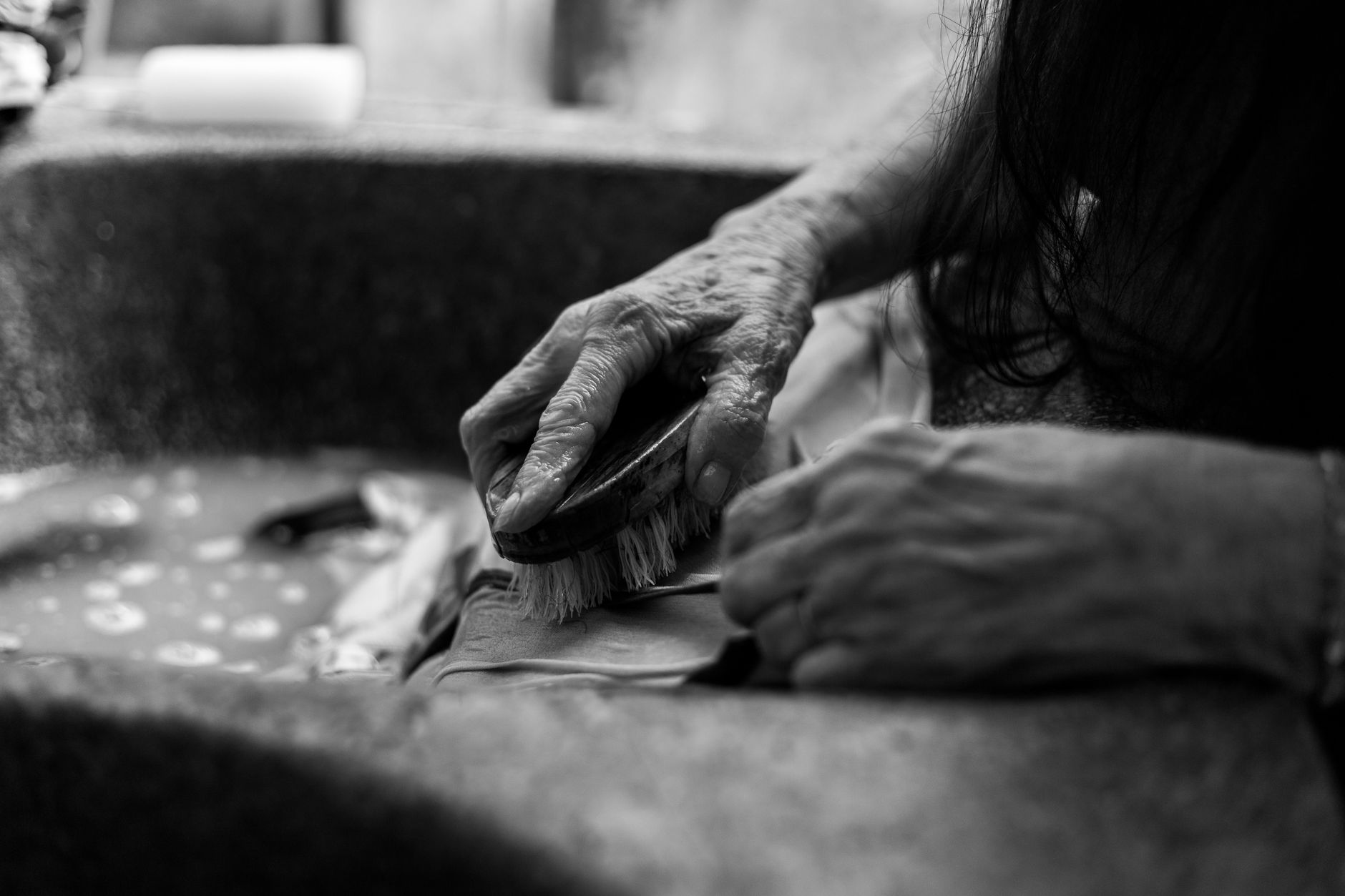
Hand washing fabric is one of those skills that sounds old-fashioned until you ruin something you loved in a machine cycle. It's genuinely the gentlest cleaning method available, and for printed fabrics, fine fibres, or anything with embellishment, it's often the only sensible choice. The process takes about 15 minutes of active time and prevents the kind of mechanical damage that shortens a garment's life considerably.
When hand washing is the right call
Not everything needs hand washing. But certain pieces really do. Delicate knits, digital printed cottons, velvet, and any lined item are good candidates. So is anything with a care label showing the hand-wash symbol: a small tub with a single hand drawn at the water line. If you're not sure how to decode what those symbols actually mean, reading fabric care labels correctly is worth doing before you fill the sink.
The other situation where hand washing earns its place: freshening a single item between full washes. A blouse worn once to a dinner doesn't need a full machine load. A quick hand wash uses less water and keeps the fibres in better condition over time.
What you need before you start
Set up everything before the fabric goes near water. You'll need a clean basin or laundry sink, a gentle liquid detergent (wool wash or a product labelled for delicates), and two clean towels. Cold or lukewarm water only. Hot water causes fibres to contract and is the most common reason hand washing goes wrong.
Check the fabric colour first. Bright or dark digital prints can bleed on the very first wash, especially if the fabric hasn't been pre-treated. Keep a white cloth nearby and dip a corner of it against a seam or hidden edge. If colour transfers, wash the item alone and don't soak it longer than necessary. For advice on protecting those colours through every wash, the guide on washing digital print fabric without fading covers the full picture.
Step-by-step: how to hand wash fabric correctly
Fill the basin with cool water. Add no more than a teaspoon of detergent and swirl it in. Submerge the fabric fully and press it down gently. Don't scrub, twist, or wring. The goal is water moving through the fibres, not friction against them.
Soak for 5 to 10 minutes maximum. For lightly worn pieces, 3 minutes is enough. For something with a faint odour or visible mark, push to 10 but no further. Extended soaking weakens elastic, loosens embroidery threads, and can cause printed colours to lift unevenly.
To clean a specific stain, press the area gently between your fingers rather than rubbing it. Use a soft toothbrush only on sturdy fabrics like canvas or thick cotton. Delicate weaves and knits won't thank you for it.
Drain the soapy water and refill with clean cool water. Press the fabric gently to rinse. Repeat until no suds remain. This usually takes 2 to 3 rinse cycles. Leaving detergent in the fabric causes stiffness and can irritate skin.
How to dry hand-washed fabric without damage
Never wring. Lift the item from the water with both hands supporting its weight, then press it firmly against the side of the basin to remove excess water. Lay it flat on a clean dry towel, roll the towel up with the fabric inside, and press firmly to absorb more moisture. Unroll and reshape the item.
Dry flat wherever possible, especially for knits. Hanging a wet knit causes it to stretch under its own weight, and that stretch is permanent. Wovens can hang on a padded hanger, but avoid wire hangers that leave shoulder marks.
Keep the item out of direct sunlight while drying. UV light fades printed fabrics, and the effect is cumulative. A shaded spot with good airflow is ideal. Indoor drying near an open window works well.
Common hand washing mistakes and how to avoid them
Using too much detergent is the most frequent problem. Excess soap doesn't rinse out cleanly and leaves a residue that affects drape and feel. One teaspoon is genuinely enough for a standard basin.
The second mistake is water that's too warm. Many people assume warm water cleans better. For machine washing sturdy fabrics, that's sometimes true. For hand washing delicates, it causes shrinkage and colour loss. Stick to cool water.
Soaking overnight is a habit some people carry over from stain removal guides. It works for some stains on sturdy fabrics. It does not work well for printed fabric, which can lose vibrancy, or for anything with interfacing, which can delaminate. If you're dealing with a stubborn mark, treat it spot-by-spot rather than soaking the whole item for hours. The guide on removing common stains from printed fabric gives targeted methods that don't require long soaks.
Finally, don't skip the reshape step. Items dried without being gently pulled back into shape can set crooked. Spend 30 seconds smoothing seams and straightening hems while the fabric is still damp. It saves ironing time and keeps the fit accurate.
A note on hand washing frequency
Hand washing every time you wear something is unnecessary and shortens the life of the fabric just as much as over-machine-washing does. Spot clean where possible. Air pieces after wearing before putting them away. Reserve a full hand wash for when the item genuinely needs it. That approach keeps fibres strong and prints vivid far longer than any cleaning product will.